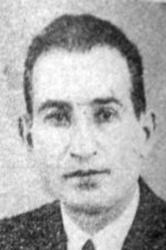
Paul Albert
 France
Paul Albert was a French literary historian, teacher, and critic whose books brought French and classical literature to a broad student readership. From provincial schools to the Collège de France, he built a career around teaching literature across languages and eras. A republican and freethinker, he also backed women’s education, a position that made his lectures a target of conservative critics in the 1870s.
Education and teaching
Albert was born in Thionville on December 14, 1827. He lost his mother when he was seven and continued his education in Paris, attending the Collège Charlemagne, Sainte-Barbe, and the Lycée Louis-le-Grand. In 1848 he entered the École normale supérieure, France’s leading teacher-training institution, and earned the agrégation in letters in 1851, a competitive qualification for teaching in secondary schools.
He taught at several lycées before completing a doctorate in letters in 1858. In 1860 he joined the Faculty of Letters at Poitiers, where he taught literature until 1866. Recalled to Paris, he taught rhetoric at the Lycée Charlemagne, became a lecturer in literature at the École normale supérieure, and also gave courses at the military academy of Saint-Cyr. His appointments brought him into contact with students across different kinds of institutions, from elite schools to military education.
Literary histories and public debate
Albert wrote histories of French and Roman literature as well as studies of poetry and prose. His Histoire de la littérature roumaine (History of Romanian Literature, 1871) won the Académie française’s Prix Montyon that year. La Littérature française au dix-septième siècle (French Literature in the Seventeenth Century, 1873) became one of his repeatedly reissued works. His book Poésie (1874) ranged across poetic works from Homer and Virgil to Shakespeare and French drama, showing the breadth of his comparative teaching. His wider project aimed to give students a coherent account of literature from antiquity through modern France.
Albert was also an early supporter of expanded educational opportunities for women. In 1867 he helped found the Association for Secondary Education for Girls and supported education minister Victor Duruy’s campaign for women’s schooling. He delivered lectures for female students at the Sorbonne, later published as studies of poetry and prose. In 1875 conservative newspapers attacked his teaching at Saint-Cyr and the École normale, and for a time he faced the prospect of losing favor with the authorities. He was described by contemporaries as strongly republican and free-thinking, views that set him apart from conservative voices in the education debates of the period.
The Collège de France and final years
In 1878 Albert was appointed to the Collège de France chair in modern French language and literature. It was a prestigious culmination of a career devoted to making literary history a central part of public education. He was already ill and exhausted, however, and died in Paris on June 21, 1880, aged 52.
His published histories continued to circulate after his death. Notes from his Collège de France course on nineteenth-century French literature were later gathered and edited by his son Maurice, himself a professor of literature. Albert’s work helped establish a widely used, survey-based approach to literary history, while his support for women’s education showed the public commitments behind his classroom career.