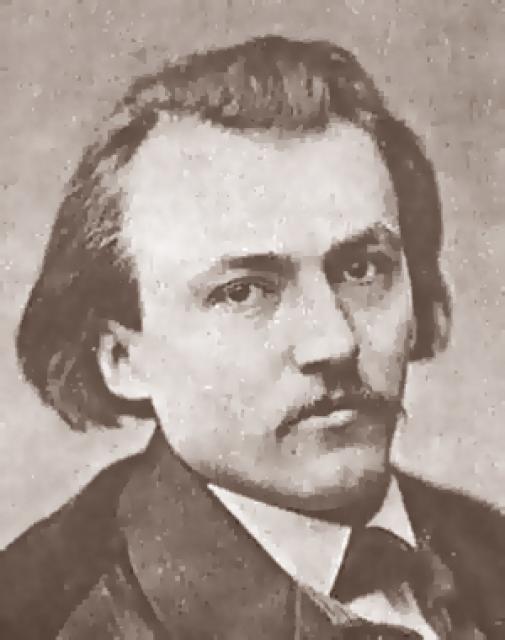
Paul Gustave Dore
 France
Biography of Paul Gustave Doré
Paul Gustave Doré (1832-1883) was a French graphic artist and painter, known as one of the most famous and prolific illustrators of the second half of the 19th century. He was born on January 6, 1832, in Strasbourg.
Early Talent and Career
Doré displayed remarkable artistic talent at the age of four, and by the time he was eleven, he had already tried his hand at lithography. In 1847, Doré came to Paris to study, and in 1848, he signed a contract with "Journal pour rire" where he was required to provide a lithograph every week. His engravings on wood for Rabelais' "Gargantua and Pantagruel" (1854) and Balzac's "Contes Drolatiques" (1855) brought him fame. Doré also illustrated many other works, such as Eugène Sue's "The Wandering Jew" (1856), Dante's "Inferno" (1861), Cervantes' "Don Quixote," and Milton's "Paradise Lost" (1866). His illustrations for the Bible (1856) are widely recognized.
Artistic Style and Legacy
Doré's pseudoromantic style, characterized by meticulous attention to detail, reflects the artistic taste of his era. He was known for his ability to capture the essence of a scene through his intricate and elaborate illustrations. His work had a significant impact on the world of visual storytelling, and his illustrations continue to be admired and studied today.
Death
Paul Gustave Doré passed away on January 23, 1883, leaving behind a legacy of exceptional artistic achievements. His contributions to the field of illustration have solidified his place as one of the most celebrated artists of his time.