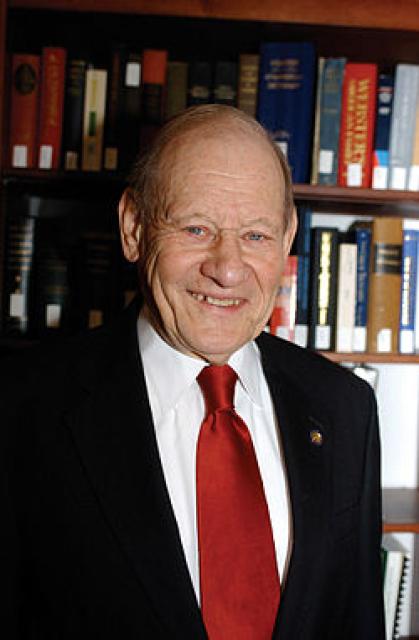
Paul Kurtz
 USA
USA- Paul Kurtz: Pioneer of Humanism and Scientific Skepticism
- Political Ideals and Military Service
- Secular Humanism
- Criticism of the Paranormal
- Eupraxophy
- Impact and Legacy
Paul Kurtz: Pioneer of Humanism and Scientific Skepticism
Early Life and EducationPaul Kurtz, born in Newark, New Jersey to Sarah Lesser and Martin Kurtz, was an American philosopher who made significant contributions to humanism and scientific skepticism. After obtaining his bachelor's degree from New York University, he went on to earn both master's and doctoral degrees in philosophy from Columbia University.
Political Ideals and Military Service
In his younger years, Kurtz adhered to left-leaning ideologies. However, his service in the US Army during World War II exposed him to the dangers of extreme ideologies. Witnessing the horrors of the Buchenwald and Dachau concentration camps, he became disillusioned with communism after encountering Russian forced laborers who refused to return to the Soviet Union.
Secular Humanism
Kurtz's experiences had a profound impact on his views on humanism. He realized that traditional humanism, which often incorporated religious or spiritual elements, could be vulnerable to manipulation. As a result, he advocated for a more rigorous, secular approach to humanism, which he termed "secular humanism." This perspective gained traction through the Council for Secular Humanism, which he founded.
Criticism of the Paranormal
Another significant aspect of Kurtz's legacy is his critique of the paranormal. He co-founded the Committee for the Scientific Investigation of Claims of the Paranormal (CSICOP) and launched the journal "Skeptical Inquirer" in 1976. Along with figures like Martin Gardner, Isaac Asimov, and James Randi, Kurtz popularized scientific skepticism and critical thinking.
Eupraxophy
Kurtz coined the term "eupraxsophy" to describe philosophical systems such as secular humanism and Confucianism that emphasize a rational and ethical approach to life, without relying on belief in the supernatural. Eupraxophies, like religions, offer comprehensive worldviews but reject the transcendental elements of faith and mysticism.
Impact and Legacy
Throughout his career, Paul Kurtz challenged established ideologies, promoted rational thought, and advocated for the separation of science and religion. His contributions to humanism, scientific skepticism, and critical thinking have had a lasting impact on society. The institutions he founded, including the Council for Secular Humanism and CSICOP, continue to perpetuate his legacy and promote the values he held dear.