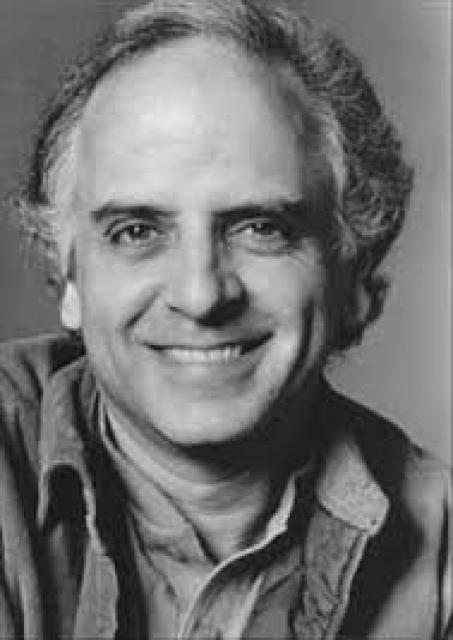
Paul Lansky
 USA
USABiography of Paul Lansky
Paul Lansky is an American composer, known for his pioneering work in electronic music and his contributions to algorithmic music. He was born on June 18, 1944, and grew up in New York City. Lansky initially studied music with George Perle, Milton Babbitt, and Edward Cone.
In the new millennium, Lansky shifted his focus from electronic and computer processing to acoustic instruments. He started creating music for renowned musicians such as David Starobin, Nancy Zeltsman, and the Alabama Symphony Orchestra. His compositions showcase his unique approach, incorporating technical techniques and esoteric algorithms.
Lansky's interest lies in exploring the relationship between pure sound and auditory association, the intersection of noise and music, words and their meanings, melody and memory. His music is complex and full of technical intricacies.

The Early Albums
Lansky released his first album, 'Smalltalk,' in 1990. The album consisted of four compositions. Despite its uniqueness and appeal, Lansky's music can be challenging for uninitiated listeners. Some may question whether it can be considered music at all.
According to Lansky, creating music becomes much more challenging when using synthesizers and computers because of the vast and almost limitless possibilities of the Synthetic Universe. With so many choices available, it becomes difficult to settle on specific movements, phrases, or timbres.
In 1992, Lansky released his second album, 'Homebrew,' which featured the notable 18-minute composition 'Table's Clea.' 'More Than Idle Chatter,' released in 1994, included computer-processed voices. The same year, Lansky released 'Fantasies And Tableaux,' which contained previously unreleased compositions.
Later Work and Recognition
Although the unconventional nature of Lansky's music attracted substantial attention, algorithmic music remains a niche genre, appealing mainly to musicians interested in computer-generated sound.
In the late 1990s, Lansky's music underwent some transformation and was perceived as a form of light alternative pop music, albeit with a more contemporary and accessible sound. He released 'Things She Carried' in 1997, followed by 'Conversation Pieces' in 1998. The album 'Ride' in 2001 served as a continuation of 'Idle Chatter.'
In 2006, Lansky released the album 'Music Box,' followed by 'Etudes and Parodies' in 2007. Notably, Lansky also implemented an algorithm for transforming English and Chinese speech.
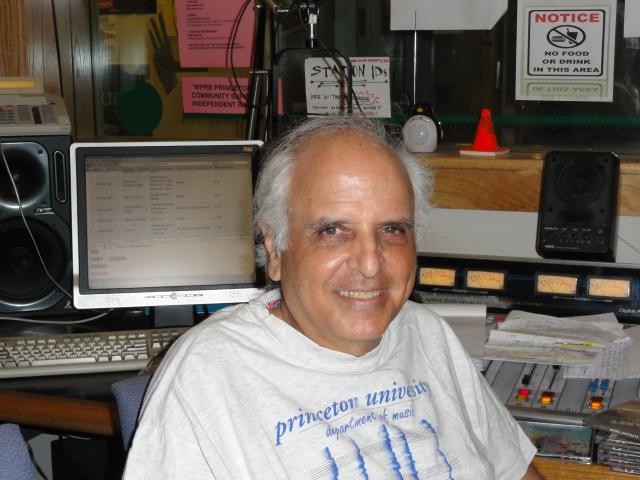
Throughout his career, Lansky has pushed the boundaries of electronic and algorithmic music, leaving a lasting impact on the field. Today, he is a professor of music at Princeton University, continuing to explore new avenues of musical innovation.



