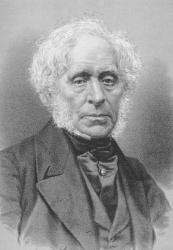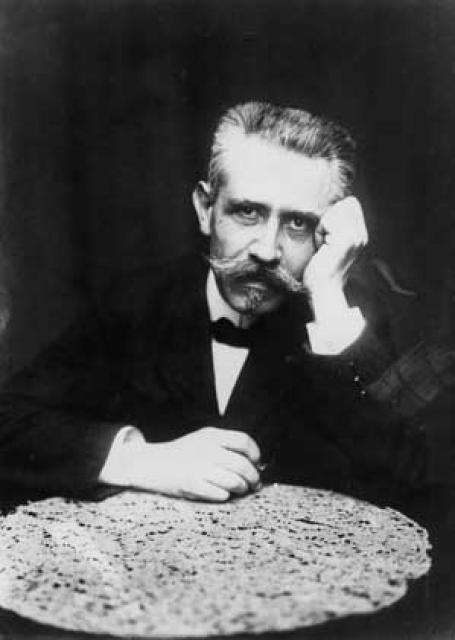
Paul Lanzheven
 France
- Early Life and Education
- Cambridge and Scientific Contributions
- Theory of Dia- and Paramagnetism
- Social Activism and Political Views
- Anti-Fascist Resistance
- Post-War Legacy
Early Life and Education
Paul Langevin, a distinguished French physicist and social activist, was born in 1872 into a working-class family. Despite their humble beginnings, Langevin's remarkable intellect secured him a scholarship to the prestigious École de Physique et de Chimie Industrielles de la Ville de Paris. There, he came under the guidance of Pierre Curie, forging a lifelong friendship with the renowned physicist. With the support of his teachers, Langevin amassed the funds to attend the École Normale Supérieure, France's top educational institution.
Cambridge and Scientific Contributions
After graduating as a physicist, Langevin embarked on a research fellowship at the esteemed Cavendish Laboratory in Cambridge, England. Under the mentorship of the illustrious J. J. Thomson, he delved into the study of gas conductivity. His pivotal work during this period earned him widespread recognition, including the development of his theory of magnetism and the classic "Langevin method" for studying ionized gases.
Theory of Dia- and Paramagnetism
Langevin's most significant contribution to physics was his elaborate theory of dia- and paramagnetism, published between 1903 and 1905. This breakthrough brought forth the use of electron theory to explain magnetic phenomena. Albert Einstein himself acknowledged that Langevin possessed a profound understanding of relativity and could have independently developed its principles.
Social Activism and Political Views
Beyond his scientific pursuits, Langevin was a passionate advocate for social justice. His political views were shaped by his sympathy towards Soviet Russia and his unwavering opposition to fascism. He became a vocal critic of the French government's involvement in the anti-Soviet intervention and actively supported organizations such as the "France-USSR" society.
Anti-Fascist Resistance
During the rise of Nazism, Langevin emerged as a staunch anti-fascist. He vehemently denounced the racial theories promoted by Nazi Germany and was instrumental in organizing the Committee for Vigilance of Anti-Fascist Intellectuals. His unwavering opposition led to his arrest by the Gestapo and imprisonment in a solitary cell.
Post-War Legacy
After the liberation of France, Langevin joined the French Communist Party in honor of his son-in-law, Jacques Salomon, a physicist who was executed by the Nazis. Frédéric Joliot-Curie, a prominent French physicist and Nobel laureate, hailed Langevin as "one of the greatest minds of our time." Langevin's legacy continues to inspire scientists and activists around the globe, serving as a testament to his brilliance, compassion, and unwavering fight for justice.