Sergey Vernov
- Early Life and Academic Journey
- Exploration of Cosmic Rays in the Stratosphere
- Entering the Field of Astrophysics
- Rocket Experiments and the Discovery of Radiation Belts
- Independent Discovery of Radiation Belts
- Later Research and Scientific Legacy
- Legacy as a Scientist and Mentor
Pioneering Research in Cosmic Rays and Radiation Belts: The Legacy of Sergei Nikolaevich Vernov
Early Life and Academic Journey
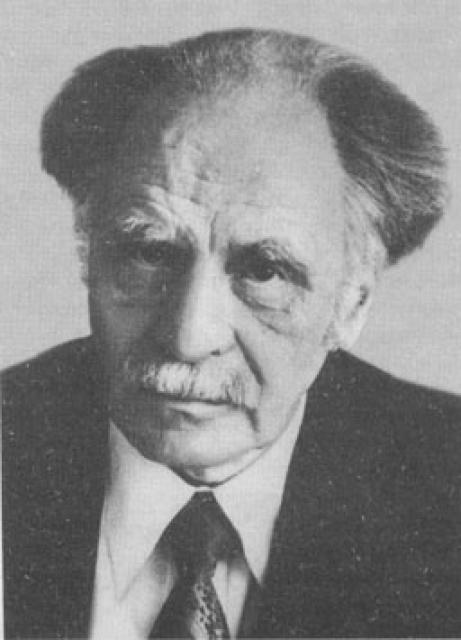
Sergei Nikolaevich Vernov, an eminent Soviet physicist, was born on July 11, 1910, in Sestroretsk near St. Petersburg. He pursued his early education at a technical school before enrolling in the prestigious Leningrad Polytechnic Institute (now St. Petersburg State Technical University) in 1929, graduating in 1931.
Exploration of Cosmic Rays in the Stratosphere
Vernov's interest in cosmic rays began during his undergraduate years, and he soon joined the State Radium Institute. His doctoral dissertation (1939) focused on "The Latitude Effect of Cosmic Rays in the Stratosphere," establishing a new experimental approach using radiosonde balloons.
Entering the Field of Astrophysics
In 1943, Vernov joined Moscow State University (MSU) as a professor and later became head of the Department of Cosmic Rays. He was also appointed deputy director of the Research Institute for Nuclear Physics (NIYAF) in 1946, becoming its director in 1960.
Rocket Experiments and the Discovery of Radiation Belts
Vernov's groundbreaking work involved the use of rockets to study cosmic rays in the upper atmosphere. In collaboration with Sergei Korolev, he launched instruments on three rockets in 1946 and on ballistic missiles in 1947. These experiments provided crucial insights into proton interactions and nuclear collisions.
Independent Discovery of Radiation Belts
In 1958, Vernov's team detected a region of high radiation intensity in the polar regions using the Third Soviet satellite. However, due to technical difficulties, he was unable to announce his discovery promptly. American physicist James Van Allen later received credit for the discovery in 1958, but the belts are now often referred to as the Van Allen-Vernov radiation belts.
Later Research and Scientific Legacy
Vernov continued to study radiation belts, investigating particle trajectories, acceleration, and human influence. His research laid the foundation for a comprehensive theory of Earth's radiation environment. He was elected a corresponding member of the USSR Academy of Sciences in 1953 and a full member in 1968.
Legacy as a Scientist and Mentor
Sergei Nikolaevich Vernov passed away in Moscow on September 26, 1982. His pioneering contributions to the understanding of cosmic rays and radiation belts left an enduring mark on astrophysics and space exploration. Vernov trained a generation of outstanding scientists, establishing a thriving scientific school that continues his legacy of groundbreaking research.