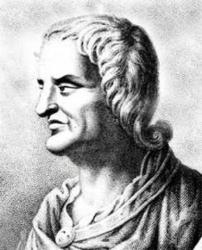
Vazha-Pshavela
 Georgia
- Birth and Early Life
- Education and Literary Beginnings
- Social and Cultural Themes
- Language and Style
- Later Life and Death
- Legacy and Impact
Birth and Early Life
Luka Razikashvili, better known as Vazha-Pshavela, was born on July 14, 1861, in the village of Charghali in eastern Georgia. The son of a priest, he spent his childhood amidst the rugged landscapes of the Pshavi and Khevsur mountain tribes.
Education and Literary Beginnings
At the age of 10, Vazha-Pshavela enrolled in Telavi Theological School. Later, he attended a two-year civil school in Tbilisi and the Gori Teachers' Seminary, where he became acquainted with Georgian populists. Despite his seminary studies, he had a limited teaching career, opting instead to work in agriculture and sheepherding in the mountains.
His literary debut occurred in 1881. Vazha-Pshavela's works were deeply rooted in the social and ethnographic traditions of the mountain tribes he lived among. He depicted their customs, beliefs, and conflicts in poems such as "Gogoturi and Apshina" and "Stumar-Maspinzeli."
Social and Cultural Themes
Vazha-Pshavela's writing often explored the tension between traditional and modern values. He portrayed the clash between individual aspirations and communal "truth" in a society undergoing rapid change. His poems are characterized by a strong sense of anthropomorphism, bringing nature to life with human emotions and characteristics.
He also questioned the role of personal talent in a society dominated by social and political constraints. In poems like "Gvelis Mchameli" ("Serpent Eater"), he lamented the frustrations of a gifted individual thwarted by circumstance.
Language and Style
Vazha-Pshavela's poetry preserved the Pshav and Khevsur dialects, incorporating their elevated lyrical tone. His prose works, on the other hand, were written in the standard Georgian language. His writing is noted for its vivid imagery, realistic symbolism, and romantic melancholy.
Later Life and Death
In 1896, Vazha-Pshavela became a teacher in the village of Toneti. He later moved to Tbilisi for medical treatment, where he died on June 27, 1915, following a severe lung infection.
Legacy and Impact
Vazha-Pshavela is considered a towering figure in Georgian literature. His work has been widely translated into Russian, English, and other languages. In 2002, a festival bearing his name was established to honor his contributions to Georgian culture.
Vazha-Pshavela's legacy lives on in the hearts of Georgians and beyond. His poems continue to inspire and resonate with readers around the world, offering insights into the human condition and the enduring power of the human spirit.