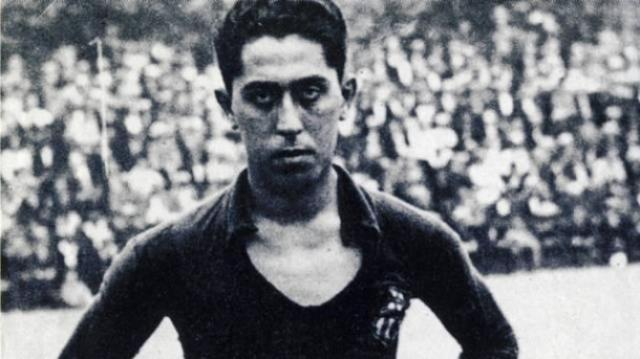
Paulino Alcantara
 Spain
Spain- Biography of Paulino Alcántara
- Early Life and Career
- Success with FC Barcelona and National Team
- Return to FC Barcelona and Later Life
- Involvement in Politics and Military
Biography of Paulino Alcántara
Paulino Alcántara Riestra was a Filipino-Spanish footballer and football manager. He spent the majority of his career at FC Barcelona and became a key player for the team. After his departure, the team's performance declined significantly, leading the club's management to beg for his return.
Early Life and Career
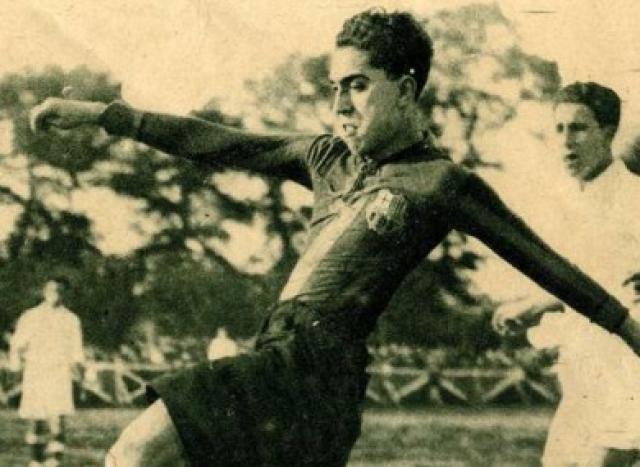
Alcántara was born in the province of Iloilo in the Philippines to a Spanish military family. When he was three years old, his family moved to Barcelona, where he would later consider the city and FC Barcelona his second home. He initially played for FC Galeno before catching the attention of FC Barcelona's founder, Joan Gamper. Alcántara earned a place in the club's youth team and made his debut on February 25, 1912, scoring three goals in a 9-0 win against Catalá SC. At 15 years, 4 months, and 18 days old, he became the youngest player to score for FC Barcelona, a record that still stands today.

Success with FC Barcelona and National Team
Alcántara played a crucial role in FC Barcelona's success, helping the team win the Spanish Cup and the Catalan Championship in 1913, as well as another Catalan Championship in 1916. In 1916, his family returned to the Philippines, where Alcántara continued his football career with the local club Bohemian. He won the Philippines Championship with the club in 1917 and 1918. That year, he was also selected to represent the Philippine national football team and helped them achieve their largest international victory, defeating Japan 15-2 in the Far Eastern Championship in Tokyo.

Return to FC Barcelona and Later Life
During Alcántara's absence, FC Barcelona struggled, and the club's management pleaded with his parents to allow him to return to Spain. Rumor had it that he contracted malaria in 1917 and refused treatment until he was allowed to rejoin the club. Upon his return, he was initially tried as a defender but eventually returned to his familiar forward position. FC Barcelona's fortunes improved significantly, and they started winning major tournaments and championships again. In 1927, Alcántara retired from professional sports and pursued a career in medicine. From 1931 to 1934, he served as a director of FC Barcelona.
Involvement in Politics and Military
In the 1930s, Alcántara was involved in the Spanish fascist movement. In August 1936, he fled to Andorra and France after Franco's failed uprising in Barcelona. He volunteered for the Carlist movement in 1936 and participated in various military operations with fascist forces. During the Spanish Civil War, he served as a lieutenant in the First Battalion of the "Black Arrows" volunteer corps and fought in Guadalajara, Aragon, and Catalonia. Alcántara was part of General Juan Yagüe's troops, known as the "Butcher of Badajoz." After the war, Alcántara lived in Barcelona until his death on February 13, 1964, at the age of 67.


