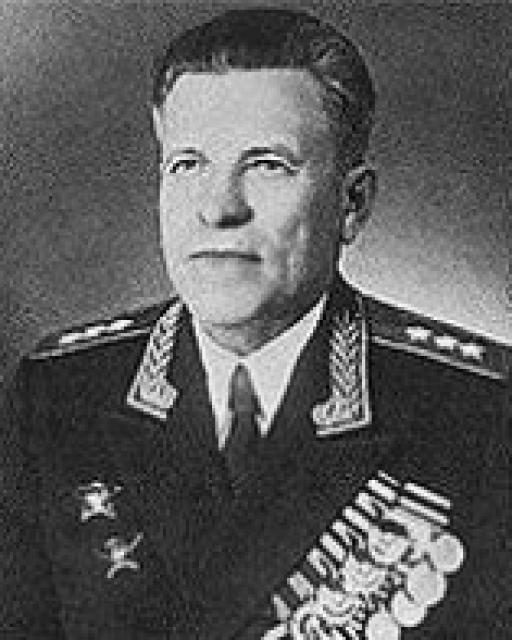
Pavel Artemyev
- Early Life and Military Education
- Revolutionary Service
- Border Guard and Internal Troops
- Academy and Command
- World War II
- Post-War Service
- Retirement and Legacy
Early Life and Military Education
Pavel Artemyev was born on the 10th of December, 1905, in the village of Lisichkino, Russia. He hailed from a humble background, being the son of a peasant. Artemyev faced poverty from a young age, working as a cobbler, laborer, and orderly from the age of 11.
Despite his challenging circumstances, Artemyev's thirst for education remained strong. He completed three years of elementary education and attended one year of secondary school. In 1915, he was conscripted into the Imperial Russian Army, where he served as a private during World War I.
Revolutionary Service
After the October Revolution of 1917, Artemyev joined the Red Guard. In 1918, he enlisted in the Red Army. During the Russian Civil War, he fought as a miner-engineer and political instructor with the 1st Rifle Division.
After the war, Artemyev transitioned to internal service, serving as party secretary, battalion commissar, and military commissar of the Ekaterinoslav Convoy Regiment. In 1923, he began his association with the OGPU/NKVD, the Soviet secret police, where he held various positions, including military commissar of a school for junior officers and deputy military commissar of refresher courses.
Border Guard and Internal Troops
In 1925, Artemyev graduated from the OGPU's Higher Border Guard School. He subsequently served in the border guard, where he rose through the ranks, eventually commanding the 23rd Rifle Regiment, 56th Railway Regiment, 4th Ukrainian Motorized Mechanized Regiment, and 1st Belarusian Motorized Mechanized Regiment.
Academy and Command
In 1938, Artemyev graduated from the Frunze Military Academy. He then became head of the Novo-Peterhof Military-Political School named after Voroshilov. In August of the same year, he was appointed commander of the Independent Motor Rifle Division of Special Purpose named after Dzerzhinsky. In this capacity, he participated in the Soviet-Finnish War of 1939-1940.
From February 1941 to June 1941, Artemyev served as head of the NKVD Operational Troops Directorate.
World War II
With the outbreak of World War II, Artemyev was appointed commander of the Moscow Military District on June 30, 1941. He was tasked with organizing the defense of Moscow. From July 18 to 30, 1941, he commanded the Mojaisk Line of Defense. From October 12, 1941, to October 15, 1943, he was the commander of the Moscow Zone of Defense.
Under Artemyev's leadership, defensive fortifications were built on the outskirts of Moscow, reserve units were prepared for deployment, and measures were implemented to strengthen the city's infrastructure. He commanded the legendary Red Square parade on November 7, 1941, and was entrusted with organizing the Victory Parade in 1945.
Post-War Service
After the war, Artemyev remained in command of the Moscow Military District until 1947. In 1949, he returned to command the district after completing higher academic courses at the Voroshilov Military Academy.
Retirement and Legacy
Artemyev's affiliation with the NKVD made him a target after the arrest of Lavrentiy Beria in 1953. He was removed from his command and assigned to the Ural Military District in a diminished role. He retired in 1960.
Pavel Artemyev passed away in Moscow in 1979. His memoirs provide valuable insights into Soviet military history. He was awarded the Order of Lenin, Order of the October Revolution, Order of the Red Banner, and various other medals for his distinguished service.


