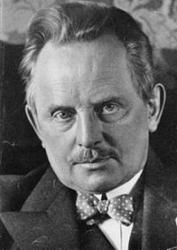
Pavel Bessonov
 Ukraine
Biography of Pavel Bessonov
Pavel Bessonov, an aviation engineer, officer, and writer, was born in the railway settlement of Gryazi in the Voronezh region, into a family of railroad workers. He studied at a railway school but did not pursue a career in the railway industry. Instead, he began working as a locksmith at the age of 16 at the SCB service station in Gryazi. However, his life, and that of the whole country, was forever changed by the war. He became a soldier and later an officer, specializing in aviation engineering. He also excelled as a poet.
After graduating from the renowned Mozhaysky Military Engineering Academy, Bessonov spent most of his life in Ukraine, specifically in Mariupol, for the last 40 years. Today, on the eve of his 85th birthday, Pavel Bessonov, author of several books and recipient of numerous literary awards, including the Taras Shevchenko International Award, shares his reflections on life and destiny with us. "Memory hits me with precision and awakens everything that is dear to my heart, enticing me once again..."
In Bessonov's life, he has experienced both war and peace, the Soviet Union and an independent Ukraine, military service and literary creativity. What stands out the most to him today and seems most significant?
"The end of childhood. It is no longer here. The city's windows are blind sockets. Black birds in empty skies. Somewhere, fear is hiding under a spoonful. Black drops falling down, smoky swirls, and piercing screeches. The siren is silent. Anti-aircraft guns are silent. A long line at the military registration and enlistment office. Childhood has ended, but the military commissioner is strict: 'The time will come, and we will call you!' The time has come, and in February 1944, I, along with other 17-year-old boys, joined the Air Force battalion of the Black Sea Fleet in Novorossiysk. In addition to intensive military training, we participated in mine clearance and the clearing of mountain roads from Gaiduk to Gelendzhik and Novorossiysk. In July 1944, the most skilled soldiers from the battalion were selected and sent to the Naval Aviation Technical School in Perm. From October 1945, I served as an aviation mechanic in the naval aviation in Crimea. It was the time of the 'Cold War', with U.S. aircraft stationed on the Black Sea coast in Turkey, and our unit was on round-the-clock combat duty. In 1955, I entered the Mozhaysky Lenin Military Air Engineering Academy in Leningrad, which I graduated from in 1960 as an aviation engineer-mechanic. I served in the Strategic Rocket Forces units in the Odessa, Siberian, and Ural military districts. In 1971, I was sent as a military representative to the Tiazhmash Plant in Mariupol. In 1972, I retired from the armed forces due to age. I can't say that I wrote poetry during all those years - the conditions were not poetic. Even reading time was severely lacking. I was also seriously involved in sports - I was a candidate for master in athletics. However, after graduating from the academy, I gradually began to discover the masterpieces of Russian and Soviet poetry, particularly the works of war poets such as Simonov, Asadov, Vanshenkin, Mezhirov, Samoilov, Levitansky, Slutsky, Gudzenko... It awakened something in me as well. I started by writing in a desk drawer and then began publishing in newspapers and magazines. In 1986, a collection of my poems was accepted by the Moscow publishing house 'Sovetsky Pisatel'. It was a great success, even though I was already 60 years old at the time. I remember visiting the publishing house, interacting with the editor of the almanac 'Poetry', poet and war veteran Nikolay Starshinov, his colleague Vladimir Karpeko, and the chief editor of the publishing house, Yegor Isaev. They were like brothers to me. The book made it into the publishing plan but was overshadowed by the 'wave of perestroika', and in 1988, 'SP' publishing house began to collapse right before our eyes. The manuscripts were returned to the authors. But as the song goes: 'He who wants it will achieve it'. Nonetheless, my poems saw the light of day in the Donetsk publishing house 'Lebed', and I am glad that the books were warmly received by both critics and readers. My poetry represents the voice of a generation that was once described as: '... it was introduced as an addition to incomplete shelves and corps. It was introduced as living blood, which was poured into the armies while it was still alive. And, by the way, this helped.' I write sincerely and only about what concerns me. That's why I think my poems resonate with readers. And that's the most important thing."
Which encounters with other writers left a lasting impact on your creative work?
"The meetings with Starshinov, Karpeko, and Isaev were important for me. Their moral support was invaluable. In Mariupol, I had a memorable conversation with Bella Akhmadulina, who held a literary evening in our city. I asked her and her husband Boris Messerer to visit us, and we spent almost the entire day together. There were feasts and swimming in the sea. There was no arrogance or alienation, no 'abstract' discussions about literature. However, in Bella's gaze, which she cast upon the surrounding landscape, there was something unearthly. What stuck with me was the idea that a poet remains a poet even in everyday life. I also remember a trip to the BAM (Baikal-Amur Mainline) in 1983. I was offered to go on a business trip with poet and journalist Vasily Mamnev to report on the construction. We visited the settlements of builders and railway workers, and eventually reached the Ust-Kut station, the final destination of the Western section of the BAM. From there, a two-track railway cut through the taiga to the east, towards the Mayak Ridge, where they had already begun tunnel construction. I met some of my fellow countrymen from Donbass there. Their work was very hard, only suitable for real men. But the BAM workers knew how to relax too. In the town of Ulkan, there was a youth club called ERA. They read poems in Azerbaijani, Ukrainian, and Russian during weekly meetings. They also played bard songs on the guitar. I met a young poet named Yuri Kozhevnikov there, who later moved to Mariupol, where his book 'The Pre-Sunset Sun' was published. Unfortunately, Yuri Kozhevnikov passed away in 2002, leaving behind dozens of notebooks filled with handwritten poems and prose excerpts. Later, in Moscow, his final book 'The Monument' was published, including all the previously unpublished works. Books outlive their authors."
Today, Pavel Bessonov continues to write and remains active. His poems can be found on various literary websites, in magazines, and anthologies. He is truly not retired; he is still in the ranks, standing alongside the honor and hopes of those whose souls fly in the formation of cranes, reminding us of what should never be forgotten under any circumstances.
"As long as our hearts beat, the war still lives within us, still with us, awakening us with hot, smoky dreams in the night. And the day when the keys to Victory were handed to us soldiers will remain a festive date for us as long as our hearts beat."