
Alexander Kennedy
 Great Britain
- Early Life and Education
- Engineering Career
- Locomotive Engineering
- Steam Engineering
- Academic and Research Career
- Laboratory Establishment
- Publications and Translations
- Consulting Business
- Electrical Engineering
- Railroad and Tramway Electrification
- World War I and Beyond
- Archaeological Explorations
- Personal Life
Early Life and Education
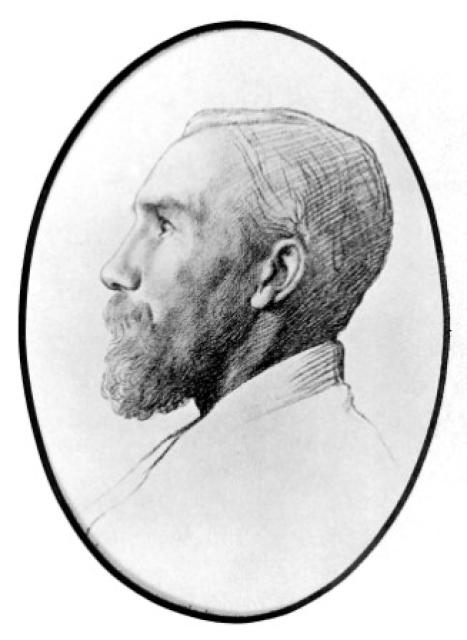
Alexander Blackie Kennedy was born in London, England, in 1847. His early education was at City of London School, followed by studies at the Royal School of Mines, where he acquired his initial engineering knowledge.
Engineering Career
ShipbuildingIn 1864, Kennedy joined J and W Dudgeon as an apprentice shipbuilder. He worked as a draughtsman for four years, gaining expertise in the construction of early steamships with double screws. This knowledge later served him well.
Locomotive Engineering
After leaving Dudgeon, Kennedy joined Palmers' Engine Works in Jarrow on Tyne as a leading draughtsman. There, he designed the first compound engine built in the North of England. He later worked as chief draughtsman at T.M. Tennant and Company in Leith.
Steam Engineering
In 1871, Kennedy became a partner in H.O. Bennett's engineering firm in Edinburgh. He played a significant role in the design, construction, and testing of steam boilers. His articles on boiler design earned him recognition and were published in the official report of the Vienna Exhibition in 1873.
Academic and Research Career
Professorship at University College LondonIn 1874, Kennedy was appointed to the Chair of Engineering at University College London, a position he held for 15 years. He introduced reforms that revolutionized engineering education worldwide, emphasizing mathematics, physics, chemistry, and other sciences alongside engineering principles.
Laboratory Establishment
Under Kennedy's leadership, a state-of-the-art engineering laboratory was established in 1878, the first of its kind. It enabled students to apply their theoretical knowledge in practice.
Publications and Translations
Kennedy translated engineering works from other languages and published his own book, "Mechanics of Machinery," in 1886.
Consulting Business
In addition to his academic work, Kennedy established a successful consulting business that operated both within the United Kingdom and internationally, including in France and the United States.
Electrical Engineering
After leaving the university in 1889, Kennedy focused on electrical engineering, a field he had investigated during his academic career. He soon gained international recognition for his work. His first major contract was with the Westminster Electric Supply Corporation, where he remained a consultant throughout his life.
Railroad and Tramway Electrification
Kennedy also consulted for several railway companies, specializing in electrification projects and tramway development.
World War I and Beyond
During World War I, Kennedy worked for the Admiralty. Witnessing the horrors of the conflict on the Western Front led him to pursue his love of photography and mountaineering.
Archaeological Explorations
In 1922, at the age of 75, Kennedy visited the archaeological excavations at Petra, Jordan. He was fascinated by the engineering aspects of the site and returned three times more. His observations and photographs were published in "Petra: its history and monuments" in 1925.
Personal Life
Kennedy married Elizabeth Verralls Smith in 1874, and they had a daughter and two sons. He was widowed in 1911 and passed away in 1928 at the age of 81.


