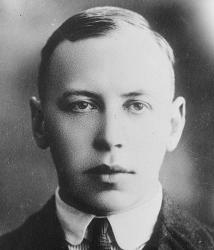
Pavel Daletsky
- Biography of Pavel Daletsky
- Education and Early Writings
- Literary Career
- Portraits and Artistic Depiction
- Literary Works
- "On the Hills of Manchuria": A Classic of War Literature
Biography of Pavel Daletsky
Early Life and FamilyPavel Leonidovich Daletsky was born on December 25, 1891, in Lomianki, Poland, to Lieutenant Colonel Leonid Semenovich Daletsky and his wife. With the outbreak of the Russo-Japanese War in 1905, the family moved to Nikolaevsk-Ussuriysk, the hometown of Daletsky's father.
Education and Early Writings
Daletsky graduated from the Faculty of Philology at the Far Eastern University in 1924. He began publishing his writings in local newspapers in 1914. In 1926, he became the head of the Maritime Branch of the Siberian Writers' Union.
Literary Career
Daletsky's literary career was marked by his sharp debates with Futurists and his later disputes with RAPP critics, who attacked him for his views. This led him to leave for Leningrad in 1929. He joined the Communist Party of the Soviet Union (CPSU) in 1955.
Portraits and Artistic Depiction
A portrait of Daletsky by renowned Leningrad sculptor Ivan V. Krestovsky was created in 1960 and exhibited in a display of Leningrad artists' work.
Literary Works
Daletsky's work is renowned for its focus on the Far East. His novel "Green Wedge" (1924) depicts events of the Civil War in the Primorsky region. His 1929 poetry collection "To the North" explores the themes of the region. Other notable works set in the Far East include the novels "Nergui," "Concession," and "Tacoma."
"On the Hills of Manchuria": A Classic of War Literature
Daletsky's most famous work is his 1951 novel "On the Hills of Manchuria," which ranks among the significant literary depictions of the Russo-Japanese War. It stands alongside works like Novikov-Priboy's "Tsushima" and Alexander N. Stepanov's "Port Arthur."