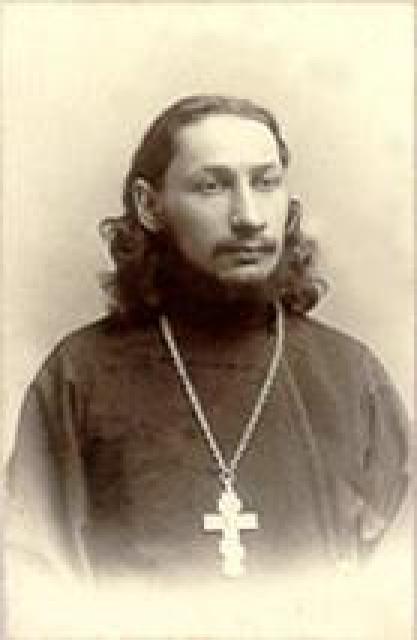
Pavel Florenskiy
 Russia
- The Symbol as a Unifying Concept
- Culture as Symbol and Cult
- The Genesis of Culture
- The Hierarchal Nature of Culture
- Culture as a Dynamic Process
- Cultural Typology
- The Importance of the Name
- Legacy and Influence
Russian Orthodox Priest, Theologian, Religious Philosopher, Scholar, Poet
Pavel Aleksandrovich Florensky (1882-1937) was a Russian Orthodox priest, theologian, religious philosopher, scholar, and poet. He was a key figure in the development of Russian religious thought and philosophy of the 20th century.
The Symbol as a Unifying Concept
Florensky's work explored the concept of the "symbol" as a fundamental aspect of culture and human existence. He argued that the symbol was a unique structure that allowed for the understanding of the relationship between the human and the Absolute.
Culture as Symbol and Cult
Florensky believed that culture was essentially shaped by symbols, which organized life and provided individuals with the means to connect with the divine. He also emphasized the importance of "cult" as a primary act that defined the entire range of human actions.
The Genesis of Culture
According to Florensky, culture evolved through a series of stages, beginning with cult, followed by myth, and eventually leading to the development of philosophy, science, and literature.
The Hierarchal Nature of Culture
Florensky proposed that different cultural phenomena could be classified hierarchically, with their proximity to the original cult determining their significance and authenticity.
Culture as a Dynamic Process
Florensky recognized the dynamic nature of culture, arguing that it was subject to both continuity and change. He believed that the loss of the cult's central role could lead to the decline of culture.
Cultural Typology
Florensky's concept of the symbol also provided a basis for understanding different types of cultures. Specifically, he differentiated between religious and secular cultures based on their use of perspective.
The Importance of the Name
Florensky emphasized the importance of "names" as cultural symbols. He argued that names were the most enduring aspect of culture and that they revealed the essence of human experience.
Legacy and Influence
Florensky's work had a profound impact on the development of phenomenology and culture studies in Russia. His concept of the symbol continues to be a significant influence on contemporary scholars and theologians.


