Pavel Fuss
 Russia
- Early Life and Education
- Early Works and Academy Membership
- Scientific Contributions and Academy Roles
- Publication of Euler's Works
- Literary Activities and Legacy
Early Life and Education
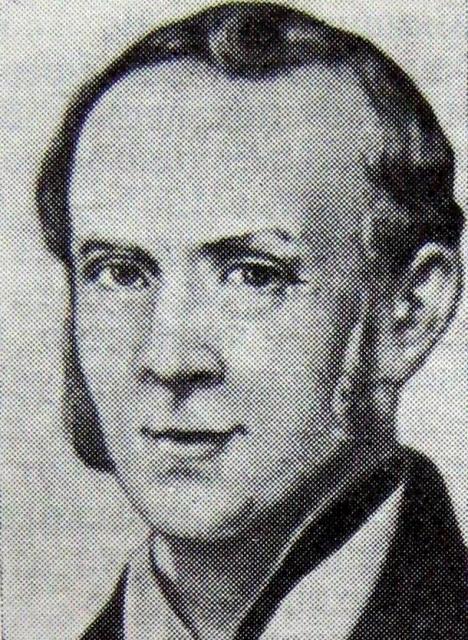
Pavel Nikolaevich Fuss (also known as Paul Heinrich von Fuss) was a renowned Russian mathematician born in 1797. He was the son of Nikolai Fuss and the great-grandson of the illustrious Leonhard Euler. In 1815, Fuss became a protégé of the St. Petersburg Academy of Sciences.
Early Works and Academy Membership
During his time as a protégé, Fuss translated several works by his father. His first independent mathematical endeavors included two publications: a commentary on Euler's "Algebra" and a comparative study of French and Russian weights and measures. In 1818, Fuss was elected as an adjunct of the academy, where he presented numerous papers on higher geometry.
Scientific Contributions and Academy Roles
In 1823, Fuss became an extraordinary academician. Three years later, he succeeded his father as Permanent Secretary of the academy and was appointed as an ordinary academician. His subsequent career primarily revolved around the bibliography of Euler's works and critical reviews of submissions to the academy.
Publication of Euler's Works
Fuss dedicated much of his time to compiling and publishing Euler's unpublished writings. He edited three significant volumes: "Correspondance mathematique et physique..." (1843), "Leonardi Euleri opera minora collecta..." (1849), and "Leonardi Euleri opera posthuma mathematica et physica..." (1862).
Literary Activities and Legacy
As Permanent Secretary of the academy, Fuss produced extensive literary works. He composed annual reports on the academy's activities and awarded the Demidov Prizes. Fuss's legacy is chronicled in Otto Struve's "Eloge de P. H. Fuss" (1856). He passed away in 1855, leaving behind a profound mark on the field of mathematics.