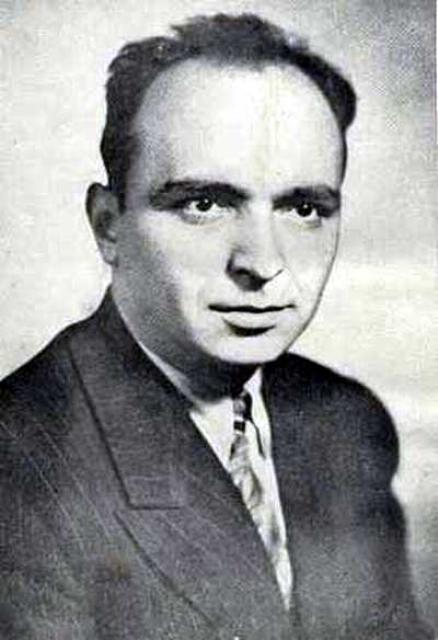
Pavel Vezhinov
 Bulgaria
- Pavel Vezhinov: A Literary and Political Luminary
- Literary Beginnings
- "Street Without a Pavement" and Philosophical Studies
- Wartime Experience and Literary Success
- Political Involvement and Literary Achievements
- International Recognition and Legacy
- Legacy and Honors
Pavel Vezhinov: A Literary and Political Luminary
Early Life and ActivismPavel Vezhinov was born into the world of Bulgarian literature and drama. However, his path took a more political turn when he joined the revolutionary youth movement. His participation in anti-government demonstrations led to his arrest and expulsion from the classical gymnasium.
Literary Beginnings
Despite his expulsion, Vezhinov did not abandon his love for the written word. He found solace working at his father's small factory, where he penned his thoughts on the marginalized and destitute, experiences that would later shape his writing. His literary debut came in 1932, and throughout the early 1930s, he contributed to various publications.
"Street Without a Pavement" and Philosophical Studies
In 1938, Vezhinov published his first book, "Street Without a Pavement," a collection of stories that captured the harsh realities of Sofia's outskirts. The same year, he enrolled in the philosophy faculty of Sofia University.
Wartime Experience and Literary Success
With the outbreak of World War II, Vezhinov enlisted as a war correspondent and editor-in-chief of the newspaper "Frontovake." His experiences with the Bulgarian army served as inspiration for his novels "Golden" and "Second Company," with the latter gaining immense popularity.
Political Involvement and Literary Achievements
After the war, Vezhinov joined the Bulgarian Communist Party (BKP) and held various editorial positions, including at "Strurshel" and "Septemvri." In 1972, he became the editor-in-chief of "Contemporary" magazine and a member of the Union of Bulgarian Writers. Vezhinov's literary output during this period included acclaimed works such as "Soft Furniture," "Blue Butterflies," and "Ajax's Death."
International Recognition and Legacy
Vezhinov's writings garnered recognition beyond Bulgaria, particularly in the USSR, where his novels and stories enjoyed widespread readership. His works touched on themes of social injustice, human resilience, and the transformative power of literature.
Legacy and Honors
Vezhinov's contributions to Bulgarian literature and his role in shaping the nation's cultural landscape were celebrated with numerous awards and accolades. He was named People's Figure of Culture in 1970 and awarded the Hero of Socialist Labor title in 1974. His premature death in 1983 left an enduring legacy of thought-provoking and poignant writing that continues to inspire and move readers.


