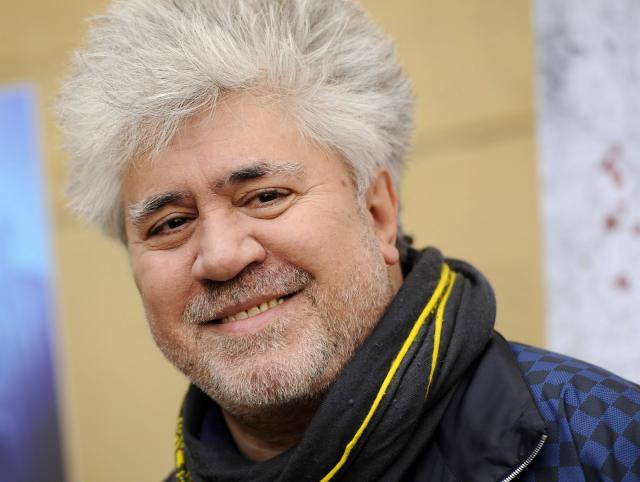
Pedro Almodovar
 Spain
Spain- Biography of Pedro Almodóvar
- Early Life
- The Early Years
- Breakthrough as a Director
- Establishing Himself as a Director
- Recognition and Success
- Later Works
Biography of Pedro Almodóvar
Pedro Almodóvar, a renowned Spanish director and screenwriter, emerged as the successor to the greatest Spanish director, Luis Buñuel, after his passing in 1983. Almodóvar gained more popularity than Julio Medem, Bigas Luna, and Carlos Saura. Like Buñuel, Almodóvar became famous for his controversial films, although their styles differed greatly. While Buñuel, who grew up in a wealthy family, mocked the bourgeoisie, Almodóvar, who found himself in Madrid at the age of 17 with no means to support himself, focused his creative attention on outsiders and bohemians.

Early Life
Pedro Almodóvar was born on September 25, 1949, in the Spanish town of Calzada de Calatrava, into a peasant family. In his childhood, Almodóvar attended a school run by Salesian monks, where he felt like an astronaut at a royal court. At the age of 12, Almodóvar watched the film "Cat on a Hot Tin Roof" and fell in love with cinema. He abandoned his previous aspiration to become a writer and started dreaming of a career as a filmmaker. During his youth, Almodóvar admired masters of cinema such as Blake Edwards, Alfred Hitchcock, Douglas Sirk, and Luis Buñuel.

The Early Years
In 1967, against his parents' wishes, Almodóvar left his family and moved to Madrid. He took a job as an assistant administrator in a telephone company but never forgot his dream of becoming a director. Almodóvar spent his evenings actively engaged in various activities. He wrote novels and stories, made short films on Super-8, performed with the theater group "Los Goliardos," and played in the musical duo "McNamara & Almodovar," performing parody glam rock.
Breakthrough as a Director
In 1980, Almodóvar released his first film, "Pepi, Luci, Bom," based on one of his photo novels published earlier in the magazine "El Vibora." This black comedy shocked Spanish audiences, who were still recovering from the Franco regime. However, the film became a cult classic in Madrid and was shown for a long time at late-night screenings. Almodóvar's next film, "Labyrinth of Passion" (1982), was criticized for its superficial and loose storyline. The only thing that critics acknowledged was its daring spirit, which captured the essence of the time. In 1984, Almodóvar released "Dark Habits," a film reminiscent of Buñuel's work, and "What Have I Done to Deserve This?," which brought him international success.
Establishing Himself as a Director
In 1985, Almodóvar and his brother Agustín founded the film production company "El Deseo," which opened up new opportunities for him. His first significant film was "Matador" (1986), which served as a precursor to his future masterpieces. The film won several awards at the Fantasporto film festival, and Almodóvar began to be recognized as a talented playwright. His next film, "Law of Desire" (1987), explored similar gay themes, which he would revisit in subsequent works. Almodóvar openly declared his non-traditional orientation and fearlessly incorporated his personal experiences into his films, featuring gay characters, transvestites, drug dealers, and prostitutes. Despite the explicit homosexual content, his films, both early and later works, remained popular due to their cleverly crafted plots, innovative cinematography, and imaginative direction.

Recognition and Success
Almodóvar solidified his status as a director with his films "Women on the Verge of a Nervous Breakdown" (1988), "Tie Me Up! Tie Me Down!" (1990), "The Flower of My Secret" (1995), and "Live Flesh" (1997). Starting with "Tie Me Up! Tie Me Down!," Almodóvar moved away from kitsch and comedy, infusing his works with profound drama. One of his most famous and significant films is "All About My Mother" (1999), dedicated to all women and mothers, including his own. The film won an Oscar for Best Foreign Language Film, a Golden Globe, and numerous other awards. Almodóvar masterfully intertwined multiple human stories into a two-hour film, transforming a soap opera into a masterpiece through skillful editing and haunting music. Since then, the main themes of his works have revolved around birth and death, with everything in between taking a back seat.

Later Works
Another masterpiece came in the form of "Talk to Her" (2002), crafted with even more sophistication and elegance than his previous work. This dark film, which still retained a glimmer of optimism, explored the themes of irreversibility and total or clinical death. In 2004, Almodóvar directed his most personal film, "Bad Education." The film reflected many events from his youth, and Almodóvar's desire to revisit the past symbolized the approach of old age, which was reaffirmed in his subsequent film, "Volver" (2006). This sentimental, slow-paced, and mystical film, which praised family values, achieved overwhelming success, receiving 46 national and international awards. It also became a personal triumph for Penélope Cruz, who played one of the main roles.
Almodóvar's latest films include "Broken Embraces" (2009) and "The Skin I Live In" (2011), which showcase a sense of fatigue in the director. Although his skill remains, a certain lethargy has replaced his former vitality. However, Almodóvar has no intention of leaving the world of cinema. In 2013, he released his new film, "I'm So Excited," and has many plans for the future. In addition to his film career, Almodóvar is also involved in literature. In 2005, a Russian version of his novella "Patti Difusa" was published, with its protagonist embodying a satirical representation of the art world in the 1980s and 1990s.
Pedro Almodóvar, who has established himself as a master of subtle psychological melodrama and a singer of free love, is undoubtedly a cult figure in Spanish cinema. His films shock and provoke debate, inspiring both admiration and hatred. Nevertheless, they are rightfully considered masterpieces.