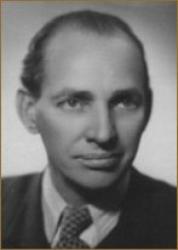
Pers Sen-Jon
 France
- Saint-John Perse: French Poet and Nobel Laureate
- Vichy Regime and Exile
- Poetic Legacy
- "Éloges" (1911)
- Legacy
Saint-John Perse: French Poet and Nobel Laureate
Early Life and Diplomatic CareerAlexis Saint-Léger Léger, known by his pen name Saint-John Perse, was born in 1887. In 1914, he joined the French diplomatic service and adopted his literary pseudonym, combining the names of Saint John the Apostle and Lucius Aurelius Persius Flaccus, a Roman poet of the 1st century AD.
Vichy Regime and Exile
During World War II, Saint-John Perse was dismissed as Secretary-General of the Ministry of Foreign Affairs by the Vichy regime in 1940. Stripped of his citizenship, he was forced to flee to America.
Poetic Legacy
Saint-John Perse's poetry is known for its enigmatic and evocative language, often described as "a poetry of poets." His most significant works include:
"Éloges" (1911)
"Anabase" (1924)"Exile" (1942)
"Vents" (1946)
"Amers" (1957)
"Chronique" (1960)
"Oiseaux" (1962)
International Recognition
Saint-John Perse's poetry has been translated into numerous languages by prominent poets such as T.S. Eliot, Rainer Maria Rilke, and Giuseppe Ungaretti. In 1960, he was awarded the Nobel Prize in Literature.
Legacy
Saint-John Perse remains an influential figure in modernist poetry, praised for his profound insights into human existence and the interconnectedness of civilizations. His work continues to inspire and challenge readers worldwide.