
Pesnyaru
 Belarus
- Biography of Pesnyary
- Popularity and Success
- Changes in Lineup and Challenges
- Shift in Musical Direction
- The 1980s and Beyond
Biography of Pesnyary
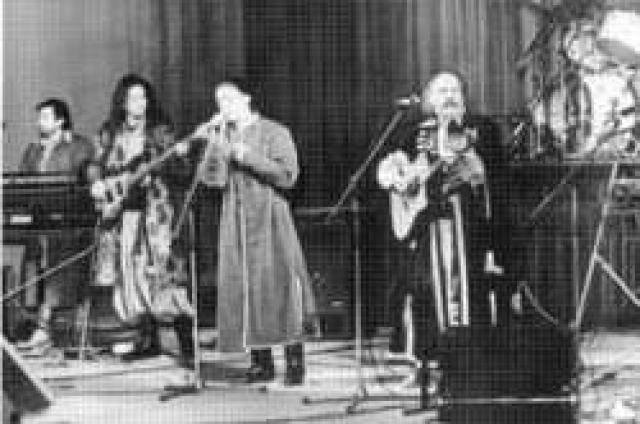
Formation and Early CareerPesnyary is a Belarusian vocal-instrumental ensemble that was formed in Minsk. The group initially started under the name "Lyavony" and consisted of Vladimir Mulyavin (guitar, vocals), Leonid Tyshko (bass), Vladislav Misevich (saxophone, flute, vocals), and Valery Yashkin (keyboard, lyre). In September 1969, Valery Mulyavin (guitar, trumpet) and Alexander Demeshko (drums) joined the band, along with former singer of the amateur group "Zolotye Yabloki," Leonid Bortkevich. This marked the birth of the new name "Pesnyary." They performed folk songs in Belarus, modernizing their sound in a similar way to how "Fairport Convention" performed old English songs in Britain.
Popularity and Success
Despite skepticism from some purists, Pesnyary quickly gained attention, especially from young listeners. They began performing outside of their republic and achieved great success by triumphantly performing at the V All-Union Pop Artist Competition in Moscow in October 1970. Following this, their popularity grew rapidly. In 1972, Valentin Badyarov joined the group as a violinist, and they released their first record with popular songs such as "Kosil Yas' Konyushinu," "Oy, Rano na Ivana," "Ty Mne Vesnoy Prisnilas'," "Rushniki," and more. However, Badyarov later left Pesnyary to form his own ensemble, "Syabry."

Changes in Lineup and Challenges
Pesnyary faced a setback in their career with the tragic death of Valery Mulyavin in a car accident in the mid-1970s. In 1976, they embarked on a tour of the southern United States accompanied by the popular American pop-folk group, the New Christie Minstrels. The group went through several lineup changes, adding new keyboardists, guitarists, and violinists. They continued to tour extensively in the USSR and Eastern Europe, releasing albums and performing both their own material and songs by professional composers.

Shift in Musical Direction
In the late 1970s, Vladimir Mulyavin, like many dynamic musicians, turned towards larger-scale musical productions. However, despite initial interest from the public and positive press reviews, their rock operas and musicals, such as "Pesenka o Dole" and "Kurgan," did not become major events. During this period, Pesnyary increasingly transformed into a professionally impeccable yet directionless machine. They continued to work diligently, creating new programs inspired by the poetry of Robert Burns, Vladimir Mayakovsky, and war poets, but their popularity steadily declined.
The 1980s and Beyond
By 1980, the lineup of Pesnyary had radically changed, with the addition of new members and the departure of others. In the early 1980s, they faced competition from other folk-based groups and philharmonic rock bands. By the early 1990s, Pesnyary had almost been forgotten. However, in the second half of 1996, under the leadership of their unwavering leader Vladimir Mulyavin, they made a comeback with a series of well-received concerts in Moscow and St. Petersburg. They also performed at the Slavianski Bazaar festival in Vitebsk in the same year.


