Peter Cooper
 USA
USABiography of Peter Cooper
Peter Cooper was born in 1791 in New York City, the fifth child of John Cooper. Throughout his life, Cooper tried various professions including carpenter, hatter, and grocer, as well as dabbling in several trades. In 1824, he purchased a small glue factory in the Kips Bay area, which marked the beginning of his successful and prosperous business for many years.
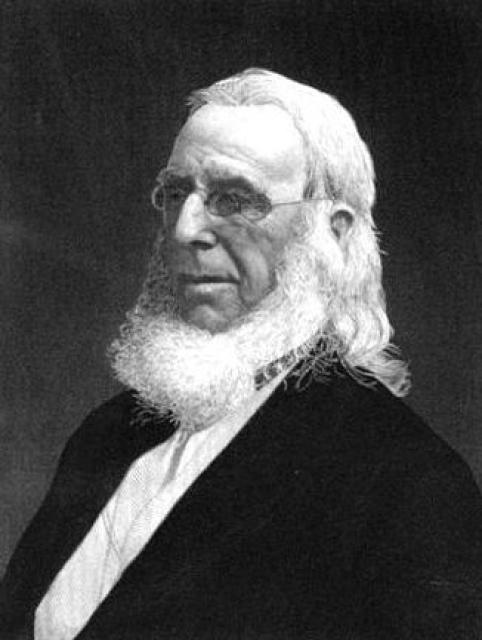
Cooper's success as an industrialist continued when he wisely invested his money in a plot of land in Maryland where iron ore was discovered. Soon, he built a metallurgical plant and began investing in real estate and insurance. Despite becoming one of the wealthiest men in New York City, Cooper continued to live a modest life, dressing simply and avoiding the luxuries and indulgences of the wealthy.

In 1840, Cooper became a member of the municipal council of New York City, and his political career remained important to him. Even before the Civil War, he was an opponent of slavery and actively participated in addressing issues of social injustice.
In 1876, at the age of 85, Cooper ran as a candidate for the presidency of the United States from the Greenback Party, a marginal party. However, he only received 1% of the popular vote.
Philanthropy
Another significant part of Peter Cooper's life and contributions was his philanthropy. As a well-known philanthropist, he donated over $800,000 to charitable projects, mainly focused on education. Thanks to him, several educational institutions for the working class opened in New York City. Cooper conceived and implemented the idea of creating educational institutions for the working class, leading to the establishment of a complex similar to the École Polytechnique in Paris, known as the Polytechnical School.
In the late 1940s, he founded the Cooper Union for the Advancement of Science and Art, which included libraries, museums of inventions, chemical and physical laboratories, a photography school, and other free programs. The goal of these institutions was to provide free education in technical disciplines and improve the knowledge of young people from working-class families.
Death and Legacy
Peter Cooper passed away on April 4, 1883, at the age of 92. He is buried in Green-Wood Cemetery in Brooklyn.