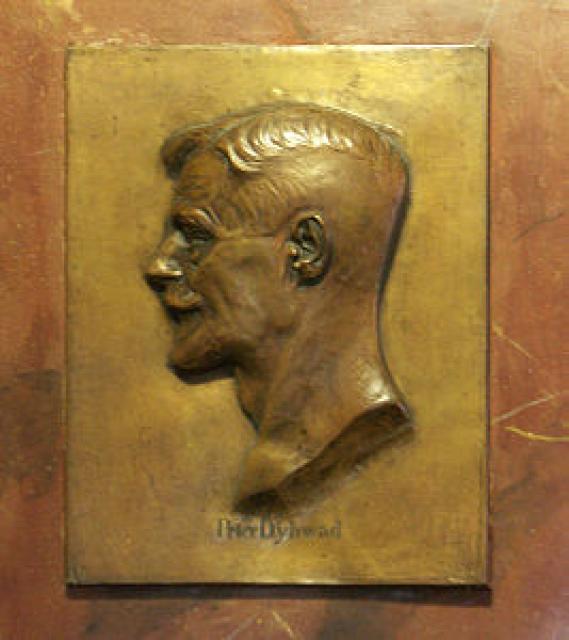
Peter Dybwad
- Peter Dybwad: A Pioneer of Modern Architecture in Leipzig
- Early Career and Education
- Triumph in the Leipzig Supreme Court Competition
- Independent Practice in Leipzig
- Residential and Commercial Masterpieces
- Legacy and Recognition
Peter Dybwad: A Pioneer of Modern Architecture in Leipzig
Peter Dybwad, a Norwegian-born German architect, left an indelible mark on the architectural landscape of Leipzig with his designs for both public and private buildings.
Early Career and Education
Born of Norwegian descent, Peter Dybwad pursued his architectural studies at the Berlin Building Academy from 1878 to 1882. In 1884, he served as a volunteer during the construction of the Berlin War Academy, under the guidance of renowned architect Franz Schwechten.
Triumph in the Leipzig Supreme Court Competition
In 1885, Dybwad and fellow student Ludwig Hoffmann emerged victorious in a prestigious architectural competition for the Leipzig Supreme Court building. Their design earned them the first prize, and Dybwad remained actively involved in the project's construction as Hoffmann's associate until 1895.
Independent Practice in Leipzig
Following the completion of the Supreme Court, Dybwad established himself as an independent architect in Leipzig. From 1897 to 1920, he also served as a technical advisory councilor on construction matters. In 1902, he moved into his own villa at Ferdinand-Rhode-Straße 32, which was unfortunately destroyed during World War II.
Residential and Commercial Masterpieces
Dybwad's legacy in Leipzig lies primarily in the numerous residential and commercial buildings he designed. Characterized by a restrained modernism that seamlessly blended traditional stylistic elements, his buildings complemented the city's architectural tapestry. Of the eight villas he constructed in Leipzig's Musicviertel, only three survive today.
Legacy and Recognition
Peter Dybwad's significant contributions to Leipzig's architecture are honored by a street named after him. His legacy continues to inspire present-day architects, showcasing the enduring value of his designs and the influence he wielded in shaping the face of the city.