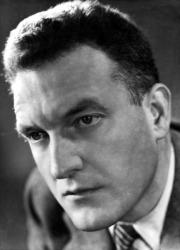
Peter Nestler
 Germany
- Peter Nestler: A Biography of a Renowned Documentary Filmmaker
- A Unique Experience: Watching Films with the Audience
- Standing Out in the Era of Mass Documentation
- A Filmmaker with a Unique Vision
- A Cinematic Encounter: Capturing Beauty and Complexity
- A Genuine Appreciation for People
- A Filmmaker with an Unwavering Vision
- The Move to Sweden and Continued Success
Peter Nestler: A Biography of a Renowned Documentary Filmmaker
Peter Nestler, a German documentary filmmaker, is known for his profound love for watching his own films and his fascination with the Moscow metro. As one of Europe's finest documentary filmmakers, his works have remained unseen in Russia until recently, when a retrospective called "Resistance of History" showcased his films. Thanks to the persistence of the project's curators and the Goethe-Institut in Moscow, not only the films but also the filmmaker himself were brought to the audience's attention. Olga Fedyanina interviewed Peter Nestler at the "Fitil" cinema, where the retrospective was taking place.

A Unique Experience: Watching Films with the Audience
Peter Nestler has always cherished the opportunity to watch his films with the audience, as he values their reactions and feedback. It is also a rare occasion for him to see his own films on the big screen. He believes that hearing the audience's response and understanding their likes and dislikes is essential for his work as a documentary filmmaker.
Standing Out in the Era of Mass Documentation
In an era when millions of people document their everyday lives, Nestler acknowledges the potential dangers of this development. He warned against the obsession with image creation and the loss of authenticity. Nevertheless, he remains committed to his unique style of filmmaking, which is free from societal expectations and constraints. Despite facing challenges in securing budgets for his films, he has consistently produced works of great depth and insight, even in times of poverty.
A Filmmaker with a Unique Vision
Nestler's films are characterized by their expressive portrayal of people and places. In his film "Pachamama," which explores life in Ecuador, he captures intimate moments of individuals at work, at leisure, singing, playing, and taking their children to communion. Despite filming in foreign countries among unfamiliar people, Nestler's camera never intrudes or disturbs. This stands in stark contrast to modern television, where cameras often invade spaces without permission. Nestler attributes this success to careful preparation and communication with the people involved, creating a shared understanding and trust.
A Cinematic Encounter: Capturing Beauty and Complexity
The people and places captured in Nestler's films are exceptionally expressive. In his film "The Sheffield Wednesday Club," set in a dreary industrial town in England, every face and location becomes a captivating event. Nestler credits the cinematographer, Dirk Alvermann, for his ability to film in tight spaces, capturing the essence of each moment. While Nestler believes that the world will never become flat and gray, he acknowledges the abundance of interesting encounters and lives that continue to inspire him.
A Genuine Appreciation for People
Nestler's profound love for people shines through in his films. He cherishes the opportunity to see them on screen again and enjoys their presence. He recalls watching "Pachamama" with the audience and feeling immense joy at seeing a female expert explaining archaeological finds. Nestler believes that capturing the essence of people and creating beautiful encounters is the key to his filmmaking. His goal is to share these encounters with the audience and leave a lasting impression.
A Filmmaker with an Unwavering Vision
Nestler's films predominantly focus on "ordinary" people, rather than the elite. However, he clarifies that it is not a matter of personal preference, but a desire to avoid exposing and exploiting individuals. Nestler shared an encounter with a local official who, upon seeing a communist slogan in one of his films, abruptly ended their meeting. As a result, Nestler faced a lack of work opportunities in Germany. Nevertheless, he remains committed to expressing his vision and allowing viewers to form their own interpretations.
The Move to Sweden and Continued Success
In 1965, Nestler relocated from Germany to Sweden due to a lack of work opportunities caused by political motivations. While his move is often portrayed dramatically in biographies, Nestler explains that it was a natural progression due to his Swedish heritage and existing contacts in Swedish television. He worked for Swedish television from 1968 to 2000 while continuing to create his own films.
Peter Nestler, born on June 1, 1937, in Freiburg, Germany, has had a diverse life journey. From attending boarding school to working in the family business and even sailing the seas, Nestler eventually pursued his passion for painting and began his career in filmmaking in 1959. Since 1962, he has focused on directing documentaries, creating an impressive portfolio of 65 films. In 1966, Nestler made Sweden his home, where he resided until his retirement. On April 14, as part of the closing day of the "Resistance of History" retrospective at the "Fitil" cinema, Peter Nestler engaged with the audience and shared insights into his work.