Petr Amyenskiy
 France
Biography of Pierre of Amiens
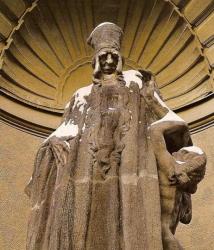
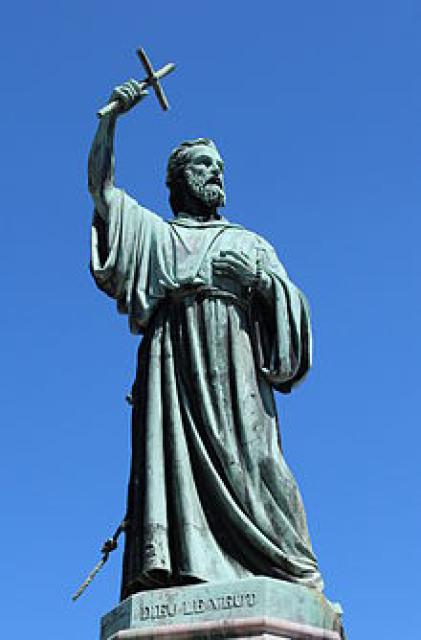
Pierre of Amiens, also known as Pierre the Hermit, was an ascetic who was attributed with organizing the first crusade. Born around 1050 in Amiens, Pierre started his life as a soldier but later withdrew from the world and became a monk and hermit. During this time, the Catholic world was consumed with the idea of crusades. The Pope was the main driving force behind this movement, which reflected the ascetic mood of the entire era. However, according to the accounts of Albert of Aachen and William of Tyre, it was Pierre who led the crusade, even inspiring the Pope himself. Despite his small stature and unimpressive appearance, Pierre possessed great courage and strength. He was intellectually sharp, spoke eloquently and freely.
Upon arriving in Palestine, Pierre was deeply saddened by the dire situation of the Christians he encountered. During a conversation with the patriarch of Jerusalem, Simon, Pierre advised him to seek help from "the lord-pope and the Roman Church, kings and princes of the West," and expressed his readiness to go to them and beseech them for aid. His confidence in success arose from the assistance of Christ the Savior himself, who appeared to Pierre in a dream, encouraging him and instructing him to embark on the crusade. In Rome, Pierre appealed to Pope Urban II.
Pierre of Amiens preached to the people about the necessity of the First Crusade. The Pope listened to his call with humility and joy, blessed Pierre to preach, and promised his fervent support. Pierre traveled to Vercelli, then to Clermont, traversing all the lands, urging them to fight for the Savior. People flocked to him, bringing gifts and praising his holiness. "Everything he said and did revealed divine grace within him." All recognized his authority. Many even plucked the hair from his mule as a relic. Pierre sustained himself with wine and fish, abstaining from bread. He gathered a large army and decided to pass through the land of the Hungarians.
All lands, princes, and knights in France rose up in unison to liberate the Holy Sepulchre. According to this legend, Pierre had already accomplished half the task when Pope Urban arrived in Clermont with a call for the crusade (in 1095). This version of events, as presented by William of Tyre, Abbot Guibert of Nogent, and Anna Komnene, pushed the Pope into the background, elevating Pierre. However, Pierre's contemporaries do not mention him, assign him the role of initiating the crusades, or speak of him as a messenger of God who stirred the West. In northern France, Pierre was known only as one of many popular preachers, and he was unknown to the English and Italians. To his contemporaries, he appeared to be an ordinary fanatic ascetic who had gathered an army of peasants, beggars, and vagabonds. Pierre and Godfrey of Bouillon led these troops. The fate of the first crusade was tragic. Constant clashes and battles in Hungary and Bulgaria, as well as general disorder, deprived the leaders of influence over the masses. The Hungarians and Bulgarians massacred the crusaders. After crossing into Asia, Pierre left the army, which was soon annihilated by the Turks, and joined the forces of Godfrey of Bouillon. When the crusaders were besieged in Antioch by Emir Kerbogha in 1098, a severe famine ensued, causing many to flee in groups or descend from the walls on ropes and disappear into the forests. Among the "rope-fleeing" individuals was Pierre, but he was caught by Tancred of Taranto, who made him swear not to run away. Pierre's name is mentioned during negotiations with Kerbogha near Antioch. After the capture of Jerusalem, Pierre returned to his homeland, arrived in Picardy, and founded an Augustinian monastery in Huîtres in 1099, where he served as the abbot until his death in 1115.