Petr Derber
 Russia
- Political Career
- Early Life and Political Activities
- Rise to Prominence
- Member of the Siberian Regional Duma
- Minister and Chairman of the WPAS
- Diplomacy and Armed Forces
- Declaration and Anti-Bolshevik Activities
- Exile to Manchuria
- Administration and Diplomacy
- Conflict and Isolation
- Resignation and Arrest
- Later Career and Death
Political Career
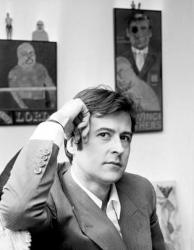
Pyotr Yakovlevich Derber (1883 [according to other sources - 1888], Odessa - 1929) was a prominent figure in the Siberian regionalist movement of the early 20th century.
Early Life and Political Activities
Derber, known as "Petya Maly" ("Little Pyotr") in Siberia, was an active member of the Socialist Revolutionary Party from 1907. He had an unfinished legal education and relied on party funding to support himself in Siberia. Derber faced persecution from the tsarist authorities and went into hiding under the pseudonym Volodsky.
Rise to Prominence
In 1917, Derber became the head of the Akmola Regional Land Committee in Omsk and a member of the Siberian Regional Duma. He participated in the Siberian Regional Congresses in October and December 1917, representing the West Siberian Soviet of Peasant Deputies.
At the December congress in Tomsk, Derber was elected to the Provisional Siberian Regional Council, the first government of the Siberian regionalists. He formed an influential political group with Grigory Potanin, known as the Derber-Potanin group, which lost influence by December 1917 due to internal divisions and the rise of the Bolsheviks.
Member of the Siberian Regional Duma
Derber was a member of the Siberian Regional Duma (SRD). He insisted on electing an anti-Bolshevik government without waiting for the planned inclusion of property-owning elements by the SRs and nationalist minorities. He opposed sharing power with them.
Minister and Chairman of the WPAS
On the night of January 25-26 (February 7-8), 1918, at a secret meeting in Tomsk, Derber was elected Chairman and Acting Minister of Agriculture of the secretly elected SRD government (later known as the Provisional Government of Autonomous Siberia, or WPAS). His party affiliation was deemed sufficient for his ministerial post.
Diplomacy and Armed Forces
In December 1917 (or January 1918 according to other sources), Derber dispatched Kraskovetsky to Ukraine to arrange an agreement with the Ukrainian Rada for the repatriation of Siberian troops. He hoped to rely on these troops in the fight against the Bolsheviks and rival organizations. As one of the few government ministers who agreed to serve willingly in January 1918, Derber escaped a planned Bolshevik arrest and trial.
Declaration and Anti-Bolshevik Activities
On January 27, 1918, Derber issued a declaration in Tobolsk and Tomsk that adapted many of Viktor Chernov's principles to Siberian conditions. It denounced the Bolsheviks' actions and declared them enemies of the people. Derber asserted that authority until the convocation of the All-Russian and Siberian Constituent Assemblies belonged to the SRD and the Siberian Provisional Government.
He opposed peace with Germany and its allies, called for an anti-Bolshevik volunteer army, advocated for the free expression of peoples' wishes regarding their status within Russia, and supported land being transferred without compensation to become "public property." Derber also promoted the nationalization of industry and banks and the creation of "public capital" and its regulation by the state. He advocated for a democratic republic and declared "Siberian autonomy for the purpose of its salvation."
Exile to Manchuria
In the winter of 1918, Derber moved to Transbaikalia after brief stays in Tobolsk and Tomsk, where he and Morawski attempted to organize a Commissariat to fight the Bolsheviks with the support of the White Transbaikalian Cossacks. He left for Harbin in February-March 1918, where Grigory Khorvat was involved in organizing a government.
Administration and Diplomacy
From June 1918, Derber was in Beijing and maintained contact with the Provisional Siberian Government (PSG) by telegraph. On July 3, 1918, after the Czechs and Slovaks overthrew the Soviet power in Vladivostok, Derber's government moved to the city. It claimed power for the WPAS, enjoying the support of the Allies, particularly the Czechs, Slovaks, and Japanese.
On July 30, 1918, Derber stepped down as Chairman of the WPAS Council of Ministers, retaining the post of Foreign Minister. In practice, the administration of the Primorye region passed to the local zemstvo, led by Medvedev. Derber recognized the Russian military forces in Vladivostok as the only legitimate forces and placed Colonel Tolstov in command.
Conflict and Isolation
Derber unsuccessfully attempted to arrest members of the Business Cabinet, including Khorvat, and accused the latter of plotting a coup. He used Allied influence against Khorvat. The government wielded little real power and faced financial difficulties in Primorye and Harbin. According to G.K. Gins, Derber's actions "aroused the fury of the bourgeoisie."
Resignation and Arrest
Under pressure from other SRs, Derber resigned as WPAS Premier in favor of Lavrov to appease the "property-owning classes" of Primorye. Around this time, Вологодский spread rumors that Derber was acting on his behalf in Western Siberia to pacify the population. However, the WPAS and Derber struggled to collaborate with the bourgeoisie.
On September 21, 1918, Вологодский forced Derber to relinquish power and dissolve the WPAS, recognizing the authority of the PSG. This was a significant victory for Вологодский, as Khorvat's Business Cabinet was seen as less of a threat.
Following this, Derber received news of the conflict between the PSG and the SRD and an appeal from Yakushev not to surrender power and to return to Western Siberia. Yakovlev mediated the exchange of information between them. Derber unsuccessfully attempted to annul the agreement with Вологодский and moved to Tomsk that same month.
In November 1918, after Kolchak's coup, Derber was arrested and sentenced to death on November 31, 1918. Local military units that revolted in late December 1918 freed him.
Later Career and Death
From late 1919 to 1922, Derber worked in Omsk and Novosibirsk. In May-July 1920, he testified in the trial of Kolchak's government ministers. In 1922, the OGPU arrested him, and he was sentenced to five years in prison. Released in early 1924, Derber worked in Moscow for Gosplan, Narkomtorga, "Exportles," and Mosoblsnab.