Petr Zavadovskij
 Russia
- Early Life and Education
- Career Under Count Rumyantsev
- Favor with Catherine II
- Civil Service and Administrative Reforms
- Ministerial Duties and Education Reforms
- Elevation to Nobility and Service under Paul I
- Return to Prominence under Alexander I
- Minister of Public Education
- Legacy and Reputation
Early Life and Education
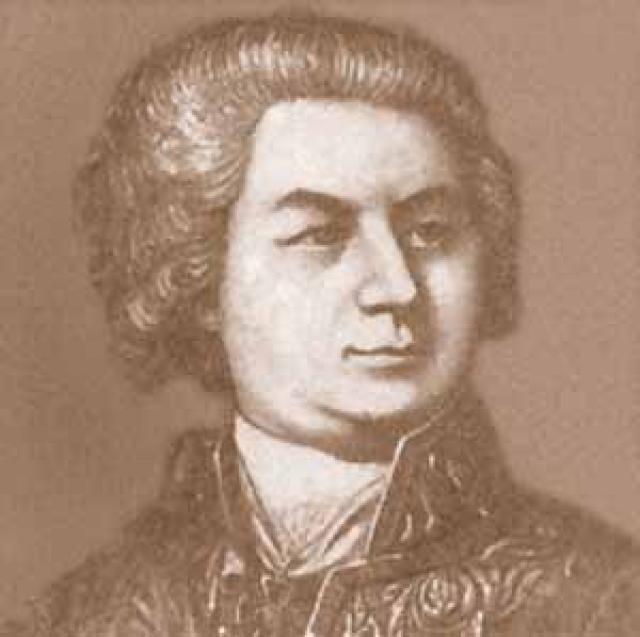
Peter Vasilievich Zavadovsky, the esteemed statesman, was born in 1739 to Vasily Fedorovich Zavadovsky, a prominent Cossack official. His early education at a Jesuit school in Orsha exposed him to Polish language and aristocratic circles. After graduating from the Kiev Theological Academy with proficiency in Latin, he began his career in the Lesser Russian Collegium.
Career Under Count Rumyantsev
Zavadovsky's exceptional abilities caught the attention of Count Pyotr Alexandrovich Rumyantsev, Governor-General of Malorossia. He was appointed as Rumyantsev's secretarial chief and entrusted with crucial matters. During the Russo-Turkish War, Zavadovsky played a pivotal role alongside Count S. R. Vorontsov in drafting the Treaty of Küçük Kaynarca.
Favor with Catherine II
In 1775, following Rumyantsev's return to St. Petersburg, Zavadovsky accompanied him and gained the favor of Empress Catherine II. For two years, he held the position of her favorite, acquiring vast estates in Chernihiv and Mogilev. His influence was seen as a potential threat to Grigory Potemkin.
Civil Service and Administrative Reforms
Zavadovsky's prominence waned due to Potemkin's opposition. Nevertheless, he contributed to the 1775 Manifesto establishing the governorate system. Upon the Empress's cooling toward him in 1777, he received additional estates in Malorossia and Poland.
Ministerial Duties and Education Reforms
From 1780 onward, Zavadovsky assumed a wide range of responsibilities. He served in the Senate and Council, managed banks, presided over legal commissions, and oversaw the restructuring of educational institutions. Under his leadership, numerous parish schools were opened, higher education was expanded with the establishment of universities in Kharkov, Kazan, and Dorpat, and a teacher training institute was founded.
Elevation to Nobility and Service under Paul I
In 1793, Zavadovsky and his brothers received the title of Count from the Holy Roman Empire. Initially favored by Emperor Paul I, he was made a Russian Count but later fell out of favor after the death of his close friend, Prince Bezborodko.
Return to Prominence under Alexander I
Upon Alexander I's ascension to the throne, Zavadovsky was summoned to St. Petersburg and appointed to high administrative positions. He played a key role in discussing administrative reforms, proposing reforms to the Senate and advocating for its legislative powers.
Minister of Public Education
In 1802, Zavadovsky was appointed Minister of Public Education, a post he held until 1810. His tenure witnessed the expansion of the education system, including the establishment of educational districts, folk schools in villages, and гимназии in provincial towns. New statutes were issued for universities, the Academy of Sciences, and theological academies, along with a censorship code (1804).
Legacy and Reputation
Emperor Alexander I held a negative opinion of Zavadovsky, attributing the success of the Ministry of Public Education to his deputy, M. N. Muraviev. Zavadovsky's biography, written by I. S. Listovsky, offers a biased perspective on his life.