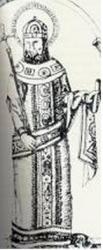
Petri Olaus
 Sweden
- Biography of Olaus Petri
- Early Life and Education
- Reformation in Sweden
- The Influence of Gustav I Vasa
- Contributions and Later Life
Biography of Olaus Petri
Olaus Petri (Swedish: Olof Peterson; Latin: Olaus/Olavus Petri) was a prominent figure in the Swedish Reformation and a writer. He was born on January 6, 1493, in Orebro, Sweden, and passed away on April 19, 1552, in Stockholm. Olaus Petri was the brother of Laurentius Petri.
Early Life and Education
Olaus Petri was born into a family of blacksmiths. He received his education at the University of Uppsala and later studied in Leipzig. From 1516 to 1518, he attended the University of Wittenberg, where he became acquainted with the leading figures of the Reformation, Philipp Melanchthon and Martin Luther, and became a follower of their ideas.
Reformation in Sweden
In 1519, Olaus Petri returned to Sweden with his brother and began preaching the ideas of the Reformation in a Lutheran spirit. In 1520, he was ordained as a deacon in Strangnas. That same year, he traveled to Stockholm for the coronation of the Danish King Christian II, who had captured the city after defeating the Swedish regent Sten Sture. During the Stockholm Bloodbath on November 8-9, 1520, Olaus Petri narrowly escaped death but was saved by a German acquaintance who presented him as a fellow countryman.
The Influence of Gustav I Vasa
In 1523, Gustav I Vasa ascended to the throne as the new King of Sweden. With the patronage of Gustav I, Olaus Petri was appointed as the secretary of Stockholm and granted the right to preach in the main church of Stockholm. As a priest, he actively preached the ideas of the Reformation and expressed strong criticism towards the Catholic Church. In October 1524, he and his brother were excommunicated from the church for heresy, but this did not change Olaus Petri's views as he had a strong supporter in the King of Sweden.
Contributions and Later Life
In 1525, Olaus Petri got married and began conducting masses in the Swedish language. He spread the new ideas not only through preaching but also through his writings. He participated in the translation of the New Testament into Swedish in 1526 and published a book of Protestant psalms called "Swedish Songs" in 1530. He also authored the historical work "Swedish Chronicle" (Sver cronika) based on ancient sources and the first dramatic composition in the Swedish language called "Comedy of Tobia" in 1550.
In 1531, influenced by the Petri brothers, King Gustav I declared Sweden a Lutheran country. In the same year, Olaus Petri assumed the position of royal chancellor, which he held until 1533. In 1539, he took holy orders as a priest. However, his relationship with the king deteriorated a few months later. Due to his objections against diverting church property for secular purposes, which displeased the king, and his failure to report a conspiracy against the king revealed to him during confession, Olaus Petri was sentenced to death by a court on January 2, 1540. However, he was pardoned, and the death penalty was replaced with a monetary fine. He later reconciled with the king.
In 1542, Olaus Petri became the inspector of Stockholm schools, and in 1543, he became a deacon at the Stockholm Cathedral (Storkyrkan), where he was buried after his death. In 1898, a monument to Olaus Petri was erected near the cathedral. Olaus Petri is the main character in August Strindberg's play "Master Olof."
This biography is based on information from the Brockhaus and Efron Encyclopedic Dictionary (1890-1907).