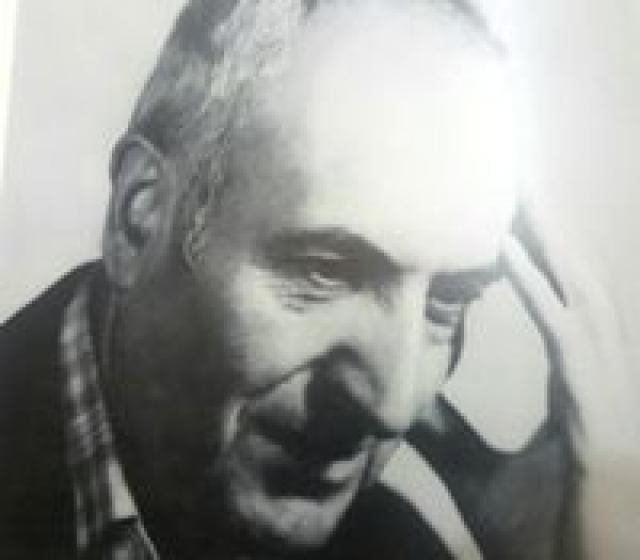
Petros Bayburtian
 Armenia
- Petros Aramovich Bayburtyan: Armenian Master of Art and Realism
- Moscow and the War
- Artistic Legacy
- The Armenian Visionary
- Color and Harmony
- Recognition and Legacy
Petros Aramovich Bayburtyan: Armenian Master of Art and Realism
Early Life and EducationPetros Aramovich Bayburtyan was born in 1912 in Alexandropol (now Gyumri), Armenia, to an artisan family. Growing up in Gyumri, he witnessed the Armenian Genocide of 1915. In 1925, Bayburtyan enrolled in an art studio where he studied under renowned masters. Later named after Soviet sculptor S.D. Merkulov, this studio provided a foundation for his artistic development.
In 1931, Bayburtyan entered the Yerevan Art and Technical College and began participating in exhibitions. Graduating in 1934, he worked in the G. Sundukyan State Drama Theater and the A.A. Spendiaryan State Opera and Ballet Theater until 1938.
Moscow and the War
In 1938, Bayburtyan participated in an exhibition of young artists in Moscow, impressing viewers with his talent. He subsequently enrolled in the Moscow Institute of Fine Arts (now the V.I. Surikov Moscow State Art Institute). During World War II (1941-1943), Bayburtyan served in the Red Army, experiencing intense combat and sustaining severe injuries. After his demobilization, he resumed his studies in 1948 at the Tartu Art Institute in Estonia.
Artistic Legacy
Bayburtyan dedicated himself to his artistic career after graduating in 1948. He held his first solo exhibition in Yerevan in 1945, followed by two more major exhibitions in 1969 and 1982. Bayburtyan's works can be found in numerous public and private collections around the world.
The Armenian Visionary
Bayburtyan was a master of realism, imbuing his art with a profound appreciation for his homeland. Color formed the cornerstone of his compositions, and he excelled in depicting scenes from Armenian life. Landscapes dominated his oeuvre, capturing the vibrant tapestry of Armenia's valleys, churches amidst nature, and rural scenes.
Color and Harmony
Bayburtyan's landscapes showcased his deep understanding of color harmony. He carefully arranged hues to create a cohesive whole, evoking the soul and spirit of Armenia. His masterful use of light and shadow further enhanced the emotional impact of his works.
Recognition and Legacy
Bayburtyan's exceptional talent was widely recognized throughout his career. He frequently encountered and captured the essence of cultural icons such as Charles Aznavour, Yuri Gagarin, Elena Obraztsova, William Saroyan, and Maya Plisetskaya. His art is a testament to his lifelong love for Armenia, its people, and its breathtaking landscapes.