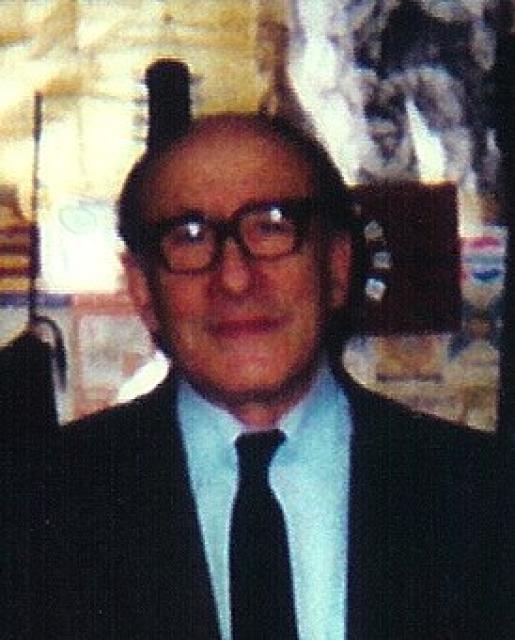
Philip Gershkovich
 Austria
- Early Life and Education
- Musical Career in Romania
- Soviet Period and Influence
- Legacy and Impact
- Late Career and Return to Vienna
Early Life and Education
Austrian, Romanian, and Russian composer, educator, and music theorist Ernst Toch was born into a musical family in Vienna, Austria. He studied at the conservatories of Iași and Vienna, where he was a pupil of Alban Berg from 1929 to 1931 and Arnold Schoenberg from 1934 to 1939.
Musical Career in Romania
After graduating, Toch returned to his native Romania and established himself as a prominent composer and conductor. He founded the Cluj Napoca Philharmonic Orchestra and served as its director until 1940.
Soviet Period and Influence
When Northern Bukovina became part of the Soviet Union in 1940, Toch moved to Chernivtsi, where he briefly taught at the Chernivtsi Musical College. During World War II, he was evacuated to Tashkent, where he composed and taught. After the war, he settled in Moscow and became a leading figure in the Soviet music scene.
Legacy and Impact
In the 1960s, Toch returned to Europe and gave lectures on the Viennese avant-garde in Leningrad, Yerevan, and Kyiv. He also published influential articles on Bach and Schoenberg. As a teacher, Toch inspired a generation of Soviet composers, including Alfred Schnittke, Edison Denisov, and Sofia Gubaidulina.
Late Career and Return to Vienna
In 1987, Toch returned to Vienna, where he continued to compose and teach until his death in 1982. His diverse body of work includes operas, symphonies, chamber music, and Lieder. He is remembered as an important advocate of the "New Viennese School" and a significant figure in 20th-century music.





