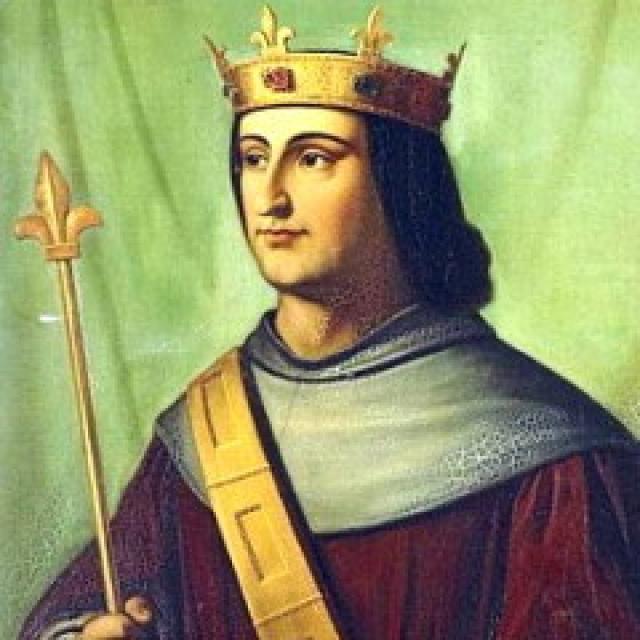
Philip VI de Valois (Fortunate)
 France
- Philip VI of Valois (the Fortunate)
- Succession to the French Throne
- The Hundred Years' War
- Legacy and Death
Philip VI of Valois (the Fortunate)
Philip VI of Valois, also known as Philip VI of France, was the first king of the Valois dynasty and ruled France from 1328 to 1350. He was born in 1293, the son of Charles, Count of Valois (brother of Philip IV the Fair), from his first marriage to Margaret of Anjou-Sicily. He was also the grandson of Philip III the Bold and the cousin-brother of Charles IV the Handsome.
Succession to the French Throne
After the death of Charles IV the Handsome, Philip, as his cousin-brother, was recognized as the king of France. However, his claim to the French throne was challenged by Edward III, whose candidacy was rejected because he descended from French kings through the female line. Edward, determined to fight for the crown at any cost, awaited an opportune moment. He was aided by a French baron, Robert d'Artois, who, feeling slighted at Philip VI's court, fled to England and conspired against his homeland.
The Hundred Years' War
In October 1337, Edward sent a challenge to Philip and subsequently captured a Flemish island. Thus began the Hundred Years' War. During Philip's reign, the war led to a devastating defeat for the French army at the Battle of Crécy on August 26, 1346, and the English capture of Calais on August 3, 1347. Following the surrender of Calais, Philip agreed to a truce with Edward, but he died before its expiration.
Legacy and Death
The war caused immense devastation in the kingdom. Entire regions were ravaged, many cities were burned to the ground, and bands of bandits emerged. The taxes imposed by the king to cover the military expenses angered the people. To partially offset his failures in the war against England, Philip acquired the cities of Montpellier and Dauphiné.
Philip VI died on August 22, 1350. He was succeeded by his son John II (the Good), who reigned until 1364.