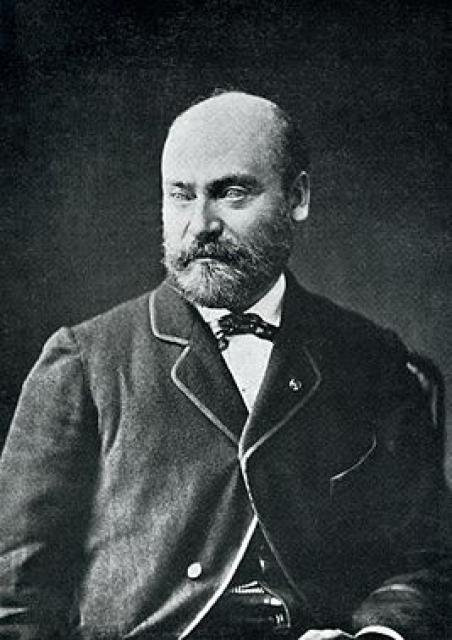
Philippe Gille
 France
- Early Life and Career
- Journalism and Criticism
- Librettist Par Excellence
- Operettas and Collaborations
- Literary Pursuits
- Honors and Recognition
Early Life and Career
French playwright and publicist Henri Meilhac was born with a passion for art. In his youth, he pursued sculpting with some success. In 1861, he became the secretary of the Théâtre Lyrique, marking his entry into the world of performance.
Journalism and Criticism
Meilhac's writing talents soon became evident as he penned articles for renowned newspapers and magazines, including Le Petit Journal, Le Temps, and Le Figaro. Under the pseudonym "Le Masque de fer," he captivated readers with his incisive theatrical reviews. As a literary critic, he fearlessly provided insightful analyses of the works of Victor Hugo, Anatole France, Pierre Loti, and Ernest Renan. His influential articles were later compiled into five volumes under the title "La bataille littéraire."
Librettist Par Excellence
Meilhac's true calling lay in opera libretti. He collaborated with eminent composers to create some of the most beloved operas in history. Notable among them are "Lakmé" by Léo Delibes (1883, co-authored with Edmond Gondinet) and "Manon" by Jules Massenet (1884, co-authored with Henri Meilhac). His librettos also graced other operas by Delibes, including "Jean de Nivelle" (1880) and "Kassya" (1893).
Operettas and Collaborations
Meilhac's versatility extended to operettas, where he worked closely with Jacques Offenbach to produce a string of successful works. These included "Le Vent du Soir" (1857), "Jeanne qui pleure et Jean qui rit" (1864), "Les Bergers" (1865), and "Le Docteur Ox" (1877). He also collaborated with Eugéne Labiche on the vaudeville "Les 30 millions de Gladiator" (1875).
Literary Pursuits
Beyond his dramatic works, Meilhac published a collection of poems entitled "L'herbier" (1887). The title, meaning "Herbarium," was met with surprise by critic Paul Ginisty, who praised the "fresh and vivid colors" of the poems, belying their name.
Honors and Recognition
In 1899, Meilhac's contributions to French literature were recognized with his election to the Académie des Beaux-Arts. He remained an active figure in the literary world until his death, leaving behind a legacy of unforgettable works that continue to enchant audiences today.


