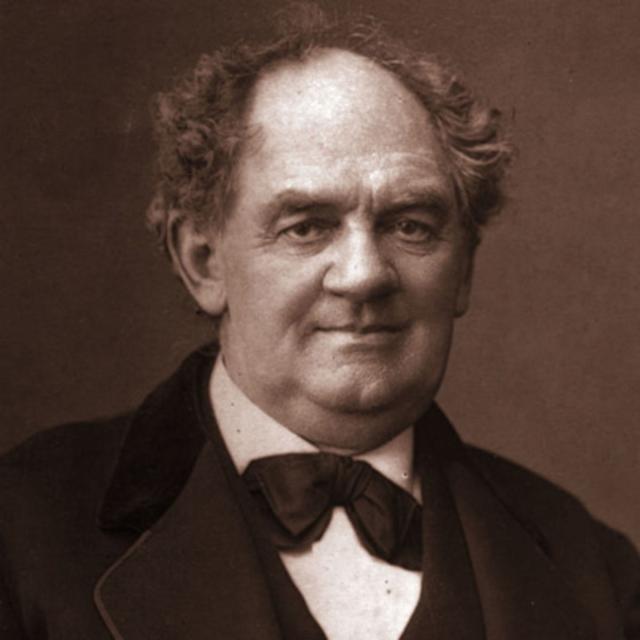
Phineas Barnum
 USA
USA- P. T. Barnum: American Showman and Entrepreneur
- The Herald of Freedom and Legal Battles
- Joice Heth and Medical Deception
- American Museum and Unique Exhibitions
- European Tour and Jenny Lind
- Circus Beginnings and the "Greatest Show on Earth"
- Autobiographies and Marketing Strategies
- Political Involvement and Humanitarianism
- Psychological Phenomenon and Legacy
P. T. Barnum: American Showman and Entrepreneur
Early Life and Career BeginningsP. T. Barnum, an American showman and entrepreneur, was born in Bethel, Connecticut, in 1810. His father ran both a hotel and a general store. Barnum's early business ventures included operating a general store and involvement in the rampant lottery business prevalent in the United States during that period.
The Herald of Freedom and Legal Battles
After failing at lotteries, Barnum established "The Herald of Freedom" newspaper in Danbury, Connecticut, in 1829. However, he faced multiple libel suits and imprisonment for libel, leading him to relocate to New York City in 1834.
Joice Heth and Medical Deception
Barnum commenced his career as a showman in 1835 by purchasing and exhibiting Joice Heth, a nearly paralyzed, blind African-American slave woman. He claimed she was over 160 years old and had been George Washington's nursemaid. Barnum captivated audiences with Heth until 1836, after which he continued to tour with her despite her death.
To dispel suspicions of deceit, Barnum staged an autopsy inviting medical professionals. The autopsy revealed she was around 80 years old, sparking rumors of Barnum replacing the body with a mechanical doll.
American Museum and Unique Exhibitions
In 1841, Barnum acquired Scudder's American Museum in New York City. He expanded its collections and renamed it Barnum's American Museum, making it one of the most popular exhibition spaces in the United States. Among its notable attractions were Charles Stratton (General Tom Thumb), a famous dwarf, and the "Fiji mermaid."
European Tour and Jenny Lind
Barnum's entrepreneurial spirit shone during his European tour with Stratton in 1844–1845. He secured an invitation from Queen Victoria and ingeniously invited Swedish singer Jenny Lind to perform in the United States for 150 concerts at $1,000 each, covering all expenses. The tour was enormously successful for both Lind and Barnum.
Circus Beginnings and the "Greatest Show on Earth"
After retiring from show business in 1855, Barnum returned due to financial obligations and began showcasing giantess Anna Swan in 1862. A disastrous fire in 1865 destroyed his museum, and he established another one in Brooklyn in 1871.
In collaboration with William Cameron Coup, Barnum founded "P. T. Barnum's Grand Traveling Museum, Menagerie, Caravan & Hippodrome," which later proclaimed itself as the "Greatest Show on Earth" in 1872. The show evolved into the famous "Barnum & Bailey Circus" in 1881.
Autobiographies and Marketing Strategies
Barnum published multiple editions of his autobiography (1854–1869). Beyond promoting sales, he distributed copies to friends and officials with his signature. These editions have gained collector's value today. Barnum used his autobiography to publicize his shows and demonstrate his marketing prowess.
Political Involvement and Humanitarianism
Barnum was politically active, participating in the Republican Party and serving as a legislator in Connecticut. He delivered a notable speech on the 13th Amendment, championing equal rights for all.
As mayor of Bridgeport for a year in 1875, he focused on improving infrastructure and social issues such as prostitution and alcohol consumption. He also played a role in establishing Bridgeport Hospital.
Psychological Phenomenon and Legacy
The "Barnum effect," a psychological phenomenon named after him, refers to people's tendency to accept general descriptions as highly accurate for themselves. Barnum had four children from two marriages.
Throughout his life, Barnum constructed four mansions in Bridgeport, Connecticut: Iranistan, Lindencroft, Waldemere, and Marina. Iranistan, with its whimsical and ornate architecture, was his most elaborate residence.
P. T. Barnum passed away in 1891 and was buried at Mountain Grove Cemetery in Bridgeport. A statue was erected in his honor in 1893 at Seaside Park, land he donated to the park in 1865.


