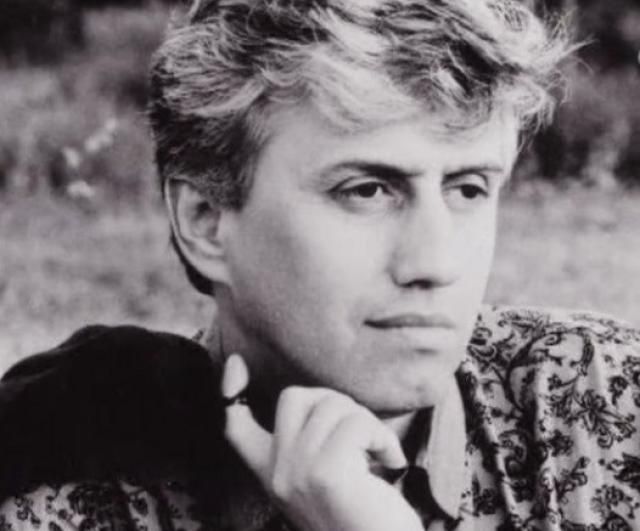
Yury Aizenshpis
 Russia
- Early Life and Family Background
- Early Career in Administration and Athletics
- Breakthrough into Show Business: The 1980s and "Kino"
- Continued Success: The 1990s and Beyond
- Personal Life and Controversy
- Health Issues and Death
Early Life and Family Background
Born in Chelyabinsk, Russia, on June 15, 1945, just one month after the end of World War II, Yuri Shmilevich Aizenshpis came from an extraordinary family. His paternal ancestors originated from Spain, but his father, Shmil Moiseyevich, was officially listed as born in Poland. As a young man, Shmil fled to the Soviet Union, fearing persecution by the Nazis. Ironically, his real name was Shmul; the N.K.V.D. officer who filled out his passport had made a mistake. Shmil Aizenshpis fought in World War II, reaching Berlin without sustaining any injuries.
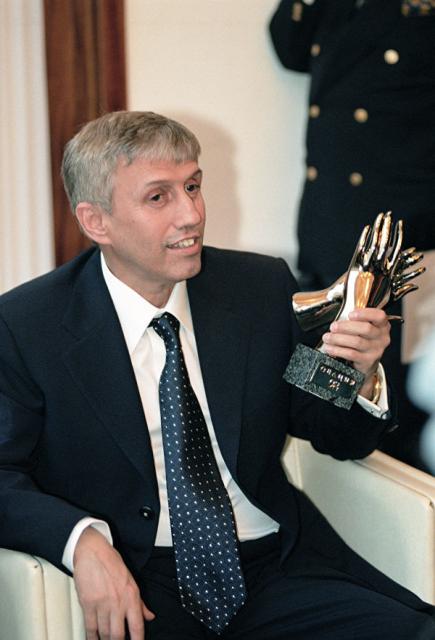
Yuri's mother, Maria Mikhailovna, had an equally intriguing background. Born in Belarus, she was orphaned at a young age and raised by distant relatives. The outbreak of war prevented her from graduating as a journalist. Instead, she joined a partisan detachment, narrowly escaping capture by the Germans several times. In the aftermath of the war, she received medals and honors for her service.
Yuri's parents met at the Belorussky Railway Station in 1944. After the war, they worked in the Main Directorate of Airfield Construction. The Aizenshpis family lived comfortably for their time, enjoying a television and a record player with an extensive vinyl collection. Until 1961, they resided in a wooden barracks but later relocated to an apartment in Moscow's Sokol district.
Early Career in Administration and Athletics
As a child, Yuri was athletic and attended sports school. He excelled in handball, volleyball, and track and field. However, an injury to his leg forced him to abandon his dreams of a professional sports career. Yuri began his first administrative roles in his youth, working with the rock band "Sokol" in 1965. Despite his interest in the entertainment industry, he earned an economics degree from the Moscow Economic and Statistical Institute.
Breakthrough into Show Business: The 1980s and "Kino"
Yuri's career as a producer took off while he was still a student. His collaboration with the rock band "Sokol" failed to achieve the desired success. Later, Aizenshpis was imprisoned for illegal foreign currency transactions. Upon his release, he found himself in the midst of the emerging perestroika era, which became a pivotal moment for his career in show business.
Through Alexander Lipnitsky, Aizenshpis became the director of the "Intershans" festival. Gradually, he mastered the nuances of the entertainment industry, learning how to influence musicians and eventually transitioning into producing. "Promoting an artist is the producer's main responsibility," he asserted. "Any means are permissible: diplomacy, bribery, threats, or blackmail."
This pragmatic approach proved effective. Aizenshpis quickly rose from a fledgling producer to a renowned shark of show business. He began assisting artists who aspired to break into the mainstream. Not every musician met Aizenshpis's standards; he only chose artists who had the potential to captivate audiences. A strong repertoire was a prerequisite. To promote his musicians, Yuri utilized the media and television extensively.
In 1988, Aizenshpis acquired the group "Kino." By that time, the band had achieved some success on their own, but they needed professional management to reach greater heights. The collaboration between the two talented individuals, Yuri and Viktor Tsoi, proved fruitful.
The producer and musician soared to unprecedented fame. Two years later, Tsoi tragically died in a car accident. Aizenshpis took out a loan of five million rubles to release the posthumous album "Chyorny Al'bom" (Black Album). Selling over one million copies, the album generated 24 million rubles in revenue for the producer.
Continued Success: The 1990s and Beyond
Yuri's career continued to flourish. After "Kino," he worked with another band, "Tekhnologiya," effectively launching their popularity. However, the collaboration ended abruptly after a year.
In 1992, Aizenshpis was recognized as the best producer in the country. A year later, he met Svetlana Geyman, better known by her stage name Linda. They collaborated for several months until Maxim Fadeev assumed management of the singer.
For six years, Yuri worked with the famous 1990s singer Vlad Stashevsky, resulting in five albums. Aizenshpis significantly boosted Stashevsky's popularity and presence in major concerts and events throughout Russia and the United States.
Over the years, Aizenshpis added artists such as Katya Lel, Nikita, and the band "Dinamit" to his portfolio. One of his most significant achievements was the discovery and development of Dima Bilan. Under Yuri's guidance, Bilan became a household name in Russia.
Aizenshpis documented his life and work in several books, including "Lighting Stars: Notes and Advice from a Pioneer of Show Business," "From Fartsovshchik to Producer: Businesspeople in the USSR," and "Viktor Tsoi and Others: How Stars Are Lit." After his death, the TV channel "TVTs" produced a program titled "Wild Money" in his memory.
Personal Life and Controversy
Rumors and speculation surrounded Yuri throughout his career. Some claimed that he introduced a "blue lobby" to the industry, alleging that women were promoted in exchange for male lovers with influence. Aizenshpis and his protégés were often accused of homosexuality, but no official confirmation was ever provided.
Despite the rumors, Yuri lived in a common-law marriage with Elena Lvovna Kovrigina. After his death, Elena quickly remarried, wedding director Leonid Goiningen-Gune. Yuri and Elena had one son, Mikhail. In 2014, Mikhail was arrested for drug use. Police found 1.5 grams of cocaine in his possession.
Health Issues and Death
Yuri's time in prison took a toll on his health. He kept his medical problems a secret for a long time. Officially, his cause of death was myocardial infarction, but it was the culmination of several conditions, including cirrhosis of the liver, gastrointestinal bleeding, and hepatitis B and C. Rumors that Aizenshpis had AIDS, which led to his death, have not been substantiated by any medical evidence.
Three days before his death, Aizenshpis felt unwell and was hospitalized. His condition improved, but he persuaded the doctors to discharge him. He wanted to witness Dima Bilan receive the prestigious MTV award in 2005.
Aizenshpis passed away two days before the ceremony, at the age of 61. His funeral took place at the Domodedovo Cemetery. Artists, composers, and other figures from the entertainment industry attended the somber occasion. Numerous photographs of a grieving Dima Bilan circulated online. Aizenshpis's grave is located near his parents' graves.