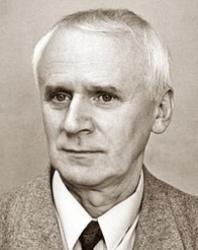
Pier Boulez
 France
Pierre Boulez: A Biography
Pierre Boulez (born 1925) is a French composer and conductor. He studied at the Paris Conservatoire under the guidance of Olivier Messiaen and later trained with René Leibowitz. Boulez is considered one of the leaders of the European avant-garde movement in the 1950s and 1960s, following in the footsteps of Anton Webern. He experimented with concrete music and his works are renowned examples of pointillism, total serialism, as well as incorporating elements of sonorism and aleatoric music.
Boulez served as the conductor of the BBC Symphony Orchestra (1971-1975) and the New York Philharmonic (1971-1977). He achieved significant recognition for his opera productions, including "Wozzeck" (Paris, Frankfurt, 1965), "Parsifal" (Bayreuth, 1966), and the "Ring Cycle" (Bayreuth, 1976). He also participated in the first complete staging of Alban Berg's opera "Lulu" (1979, Paris).
Boulez was the organizer and director of concerts showcasing new music through the "Domaine musical" series from 1954 to 1967. His most notable achievements include his recordings of Claude Debussy's opera "Pelléas et Mélisande" (Sony) and Richard Wagner's "Ring Cycle" (Philips). He is the composer of symphonic, vocal, instrumental, and electronic works, among which his most famous pieces include "Le marteau sans maître" for contralto and six instruments (1954, 2nd edition 1957, with poems by surrealist poet René Char), "Structures" for two pianos (1st series - 1952-56, 2nd series - 1961), and three piano sonatas.
Boulez is also the author of several books on music, including "Orientations" (1986). Since 1975, he has been the director of the Institute for Research and Coordination in Acoustics/Music (IRCAM) in Paris.