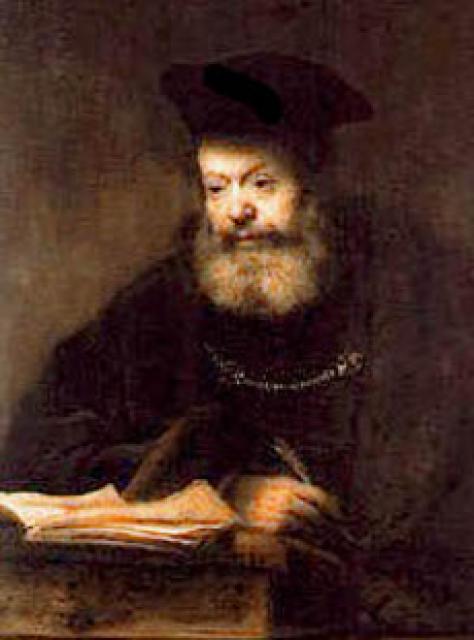
Pierre Boiste
 France
Biography of Pierre Boiste
Pierre-Claude-Victor Boiste (1765 – 24.04.1824) was a French scholar and lexicographer best known for his compilation and editing of the "Universal Dictionary of the French Language" ("Dictionnaire universel de la langue française") published in 1800. Boiste initially studied law and even practiced as a lawyer for a while. However, he eventually left his legal practice and ventured into the publishing business. He successfully established his own publishing enterprise, but by 1800, Pierre was forced to retire due to health problems. He spent the rest of his days in a rural area near Ivry-sur-Seine.
During his retirement, Boiste focused on linguistics and literature and published five significant works. His most famous work, without a doubt, is his universal dictionary of the French language. First published in 1800, this remarkable achievement was considered the best of its kind for many years. The dictionary included various pronunciations, spellings, precise definitions, and different meanings of existing words. Boiste meticulously analyzed the possible nuances and shades of meaning. It was not limited to everyday usage but also included specialized terms from various fields of science, crafts, and technology. The dictionary contained both ancient and comparatively new borrowed terms. Boiste also extensively referenced authoritative sources, building upon the work of his predecessors.
While Boiste's dictionary received praise for its vast amount of information, it also faced some criticism. Pierre Larousse noted in 1866 that Boiste's work was truly impressive and surpassed the richness and volume of the French Academy's dictionary. However, Larousse pointed out that in many cases, the author did not dedicate enough attention to developing all possible meanings. Boiste also used numerous abbreviations that were not easily understood out of context, leaving the reader to interpret them. According to Larousse, Boiste's dictionary represented the skeleton of the language, demonstrating its structure and providing a basic framework, but lacking everything that did not fall within that framework.
Interestingly, Boiste's dictionary almost cost him his freedom, if not his life. In 1805, he was arrested by imperial police for allegedly insulting Emperor Napoleon Bonaparte by calling him a "spoliateur" (a plunderer, predator). Boiste was unable to explain himself and was imprisoned at the Conciergerie. Only with the help of two members of the Institut de France, the situation was resolved. It turned out that Boiste had merely quoted one of Napoleon's speeches as an illustration of the mentioned insult in the feminine form.


