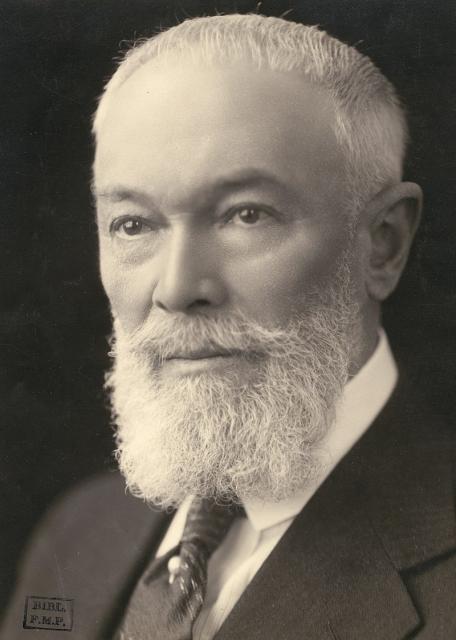
Pierre Janet
 France
- Early Life and Education
- Clinical Work and Research
- Academic Career
- Contributions to Psychology
- Death and Legacy
Early Life and Education
Pierre Janet was born on May 30, 1859, in Paris, France. He graduated from the University of Paris, where he studied under Jean-Martin Charcot, a renowned neurologist.
Clinical Work and Research
Janet initially worked in Havre before moving to Paris. From 1890, he headed the psychological laboratory at the Salpêtrière Clinic in Paris. His doctoral dissertation, "The Mental State of Hysterics," earned him recognition in 1892.
Academic Career
In 1898, Janet began teaching at the Sorbonne. From 1902 to 1936, he was a professor of psychology at the Collège de France. He received an honorary doctorate from Harvard University in 1936.
Contributions to Psychology
Psychological Concept of Neuroses:Janet's clinical observations led him to develop the "psychological concept of neuroses," which he attributed to an imbalance between higher and lower mental functions.
Consciousness and Unconscious:Unlike psychoanalysis, Janet did not draw a clear line between normal and pathological psychology. He viewed the unconscious as limited to simple forms of psychic automatism.
General Psychological Theory:In the 1920s and 1930s, Janet developed a comprehensive psychological theory that interpreted a wide range of mental phenomena. He emphasized the need for psychology to study "facts of consciousness" and avoid the extremes of behaviorism.
Hierarchical System of Behavior:Janet established a hierarchical system of behaviors, ranging from basic reflexes to complex intellectual actions. His work significantly influenced the development of psychology, particularly in France, and contributed to Lev Vygotsky's cultural-historical theory.
Death and Legacy
Janet died from pulmonary edema on February 23-24, 1947, in Paris. He was buried in the cemetery at Bourg-la-Reine, a suburb of Paris. His contributions to the understanding of consciousness, unconscious processes, and neuroses remain significant in the field of psychology today.