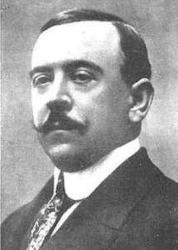
Pierre Monteux
 USA
USA- Early Life and Education
- Conducting Career
- Association with Ballets Russes
- North American Success
- European Collaboration and Leadership
- American Citizenship and Career
- Final Years and Legacy
Early Life and Education
At the tender age of six, Pierre Monteux commenced his musical education with violin lessons. Three years later, he entered the esteemed Conservatoire de Paris, where he honed his skills in violin, harmony, and counterpoint under the tutelage of renowned masters. In 1896, Monteux graduated with distinction, sharing the first prize with the prodigious Jacques Thibaud.
Conducting Career
Monteux's conducting career began at the age of 12 when he led an orchestra accompanying Alfred Cortot's concerts in Paris. At just 15, he joined the orchestra of the Opéra-Comique and the Orchestre Colonne, where he became assistant conductor and chorus master in 1894. He also played viola in the Geloso Quartet from 1894 to 1911, participating in historic performances of Brahms's quartets in the presence of the composer himself.
Association with Ballets Russes
In 1911, Monteux was invited by Sergei Diaghilev to conduct the Ballets Russes. Under his baton, the premieres of Stravinsky's "Petrushka" and "The Rite of Spring," Ravel's "Daphnis et Chloé," and other groundbreaking ballets took place. Monteux's brilliant interpretations brought him into close association with Debussy, Ravel, Stravinsky, and other contemporary composers.
North American Success
In 1916, Monteux embarked on a new chapter in the United States. He conducted at the Metropolitan Opera from 1917 to 1919, introducing French and other repertoire, including the American premiere of Rimsky-Korsakov's "Le Coq d'Or." In 1920, he took the helm of the Boston Symphony Orchestra, where he championed the works of Debussy, Chausson, Milhaud, and many others.
European Collaboration and Leadership
Monteux returned to Europe in 1924, becoming the second conductor of the Concertgebouw Orchestra. From 1929 to 1938, he led the Paris Symphony Orchestra, conducting world premieres such as Prokofiev's Third Symphony. His commitment to nurturing young talent led him to establish the Monteux School for Conductors in Paris in 1932.
American Citizenship and Career
Monteux returned to the United States in 1936, where he elevated the San Francisco Symphony Orchestra to international acclaim. In 1942, he became an American citizen. As a guest conductor, he graced the stages of the Boston Symphony Orchestra and the Metropolitan Opera. Despite his prolific recording career, Monteux maintained a preference for live performances.
Final Years and Legacy
At the age of 86, Monteux signed a 25-year contract with the London Symphony Orchestra. His later recordings with the orchestra, including Berlioz's "Romeo and Juliet" and Debussy and Ravel's works, demonstrate his enduring artistry. Monteux's conducting technique was characterized by economical, precise gestures that yielded exceptional clarity, rhythmic precision, and sonic brilliance. His unwavering dedication to music and mentorship left an enduring legacy in the world of classical music.