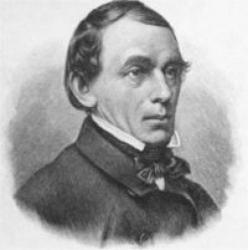
Pietro Bembo
 Italy
Italy- Pietro Bembo: A Renowned Humanist and Cardinal
- Literary and Scientific Pursuits
- Historical and Literary Contributions
- Cardinal and Papal Contender
- Influence on Italian Language and Petrarchan Poetry
- Death and Legacy
Pietro Bembo: A Renowned Humanist and Cardinal
Birth and Early EducationPietro Bembo was born on May 20, 1470 in Venice into a noble patrician family. His initial education was under his father, Bernardo, a humanist scholar who held high positions in the Venetian Republic. In 1478, Bembo moved to Florence where he excelled in languages, mastering Tuscan, Latin, and later Greek under the renowned scholar Constantine Lascaris in Messina.
Literary and Scientific Pursuits
Despite being ordained as a priest, Bembo dedicated his life to scholarship. He became a prominent member of the Aldus Manutius Academy in Ferrara, Urbino, and Rome. In 1513, he served as secretary to Pope Leo X, but returned to Padua during the pontificates of Adrian VI and Clement VII, where he lived with his mistress Morosina.
Historical and Literary Contributions
In 1529, Bembo was appointed historiographer of the Venetian Republic and in 1530 became the director of the Library of St. Mark. His literary output included treatises, letters, dialogues, and a history of Venice from 1487 to 1513. His most renowned work, "Gli Asolani," a dialogue on love and beauty, was published in 1505 and became widely popular.
Cardinal and Papal Contender
In 1539, Bembo was elevated to cardinal and in 1541 became Bishop of Gubbio. His diverse accomplishments made him a potential candidate for the papacy.
Influence on Italian Language and Petrarchan Poetry
Bembo played a pivotal role in shaping the Italian language and established Tuscan as its literary standard in his treatise "Prose della volgar lingua" (1525). His lyrical poetry followed the style of Petrarch, becoming the forerunner of Petrarchan poetry, which influenced writers in Italy and beyond.
Death and Legacy
Bembo died on January 18, 1547 in Rome. His intellectual contributions and literary masterpieces continue to be studied and appreciated by scholars and literary enthusiasts alike.