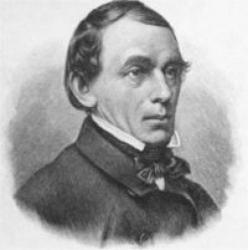
Ouyan Sun
 China
ChinaBiography of Ouyang Xun
Ouyang Xun was a Confucian scholar and calligrapher during the early Tang Dynasty in China. He was one of the most significant calligraphers in China and the region, known for his mastery of the Kai-style of calligraphy.
Early Life and Education
Ouyang Xun came from a family of administrators and scholars during the Southern Chen Dynasty. At a young age, he lost his father, who died in battle, and narrowly escaped death himself during an attack by the Sui forces. He was taken in and educated by one of his father's old friends. Ouyang Xun particularly excelled in the study of chronicles such as "Shiji," "Hanshu," and "Dongguan Hanzi."
Career and Influence
In 611, Ouyang Xun obtained a position in the Sui Dynasty. Even before Li Yuan declared the establishment of the new Tang Dynasty, Ouyang Xun's family welcomed him with honor. When Li Yuan proclaimed himself the emperor of the new Tang Dynasty, he immediately granted Ouyang Xun significant positions and authority. During the early Tang Dynasty, Ouyang Xun served as a censor and scholar at the Hunwen Academy, where he taught calligraphy. He also created a set of 36 rules for writing Chinese characters and a system for calligraphy instruction, which became widely accepted.
Ouyang Xun was a compiler and, along with Lin Hu Defen and Chen Shuda, the main author of the encyclopedia "Yuanlei Cizhu," which was completed in 624. As the state calligrapher of the Tang Dynasty, Ouyang Xun left inscriptions on several important imperial steles. Each of his surviving calligraphic works is crucial for understanding the development of calligraphy in China, Japan, and other countries.
Both Ouyang Xun's theoretical and practical works on calligraphy, as well as his calligraphy samples, have influenced the writing style of Chinese characters that followed. Some of his poetic works have also been preserved.