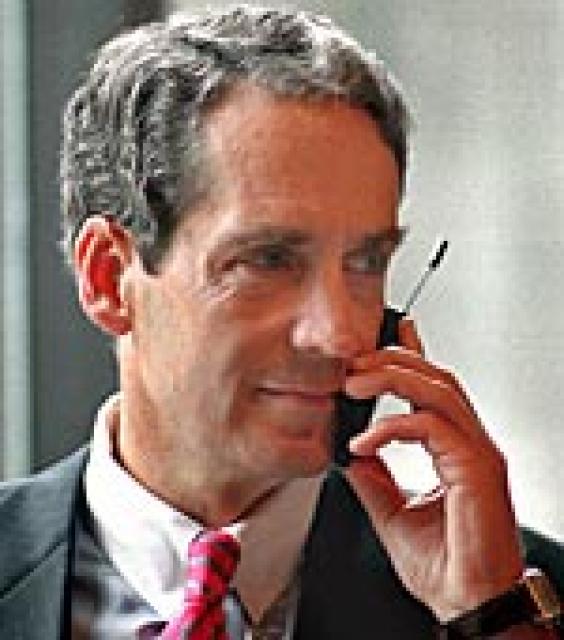
Pol Galvin
 USA
USABiography of Paul Galvin
Paul Galvin was born on June 29, 1895, in Harvard. He developed a passion for making money at a young age, selling popcorn at the train station in his hometown while his peers studied. He was entrepreneurial even then, varying his products depending on the season. He also learned about government regulations when the station manager tried to shut down his unlicensed business. This experience stayed with him as he pursued higher education at the University of Illinois in 1914.
After becoming a bachelor's degree holder, Paul joined the American army in 1917 and served in Europe during World War I, rising from a private to a captain. Upon his return, he found temporary work at a battery factory. It was during this time that he met Emil Brach, owner of Brach Candy, and became his personal secretary to support his family.
However, Paul did not give up on his ambition and, in partnership with his coworker Edward Stewart, he opened a battery company in Wisconsin. Unfortunately, this venture only lasted three years before the government shut it down for tax evasion. Paul's coat was even confiscated along with the company's assets. To make ends meet, he worked as a secretary again until he decided to try the battery business once more with Stewart in Chicago. This company also struggled and eventually failed after two years.
Undeterred, Paul used his last $750 to buy used equipment for manufacturing power supplies at an auction of bankrupt companies. His younger brother Joseph contributed an additional $565 to cover immediate expenses. On September 25, 1928, Galvin Manufacturing Corporation was established. This marked the beginning of Paul's entrepreneurial journey and the birth of Motorola.
Paul had a keen sense of market trends and realized that radios and automobiles were the two essentials in American households during the 1920s. However, combining them proved challenging due to radio interference from the car's electrical system. When engineer William Lear proposed the idea of an automotive radio, Paul initially dismissed it. But when he saw an advertisement for a custom-installed radio for $240, he recognized the potential. He tasked his engineers with creating a cheaper alternative, leading to the development of the first car radio.
In 1930, Paul and his wife personally demonstrated the car radio at a radio manufacturers' conference in Atlantic City. Despite initial skepticism, the radio received several orders, and Motorola's sales reached $287,000 in the same year. The success of the car radio paved the way for Motorola's expansion into new markets.
During World War II, Paul's foresight led Motorola to develop portable radios for the military. The company produced 130,000 military radios, securing significant government contracts. After the war, Motorola adapted its remaining car radios into home radios to compensate for the loss of military orders.
In 1947, Paul introduced the "Golden View" television, priced at $179.95. This competitive pricing made television more accessible to the masses, and Motorola sold 100,000 units in the first year. The company's sales rebounded, reaching $177 million in 1950.
As he aged, Paul prepared his son Robert to succeed him in running Motorola. Robert became executive vice president in 1948 and president in 1956. However, Paul closely supervised his son until his death in 1959. Motorola continued to innovate under Robert's leadership, introducing the world's first pager in 1956.
By 2004, Motorola's annual sales amounted to $31.32 billion, and the company employed 88,000 people worldwide. Motorola remained a leader in the mobile phone industry, producing one in every seven mobile phones globally. The company's headquarters was located in Schaumburg, near Chicago, and it had a significant impact on the town's population of 75,000.