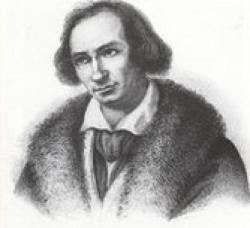
Proclus
 Greece
Proclus Diadochus Biography
Proclus Diadochus was an ancient philosopher and neoplatonist who led the Platonic Academy, during which neoplatonism reached its peak. He was born in the Greek colony of Byzantium in a wealthy lawyer's family from Xanthus. As a teenager, he went to Alexandria with the intention of following in his father's footsteps. There, he studied rhetoric and developed an interest in philosophy, becoming a student of the Alexandrian neoplatonist Olympiodorus the Younger. It was under his guidance that Proclus began studying Aristotle's logical treatises, in which he achieved success at that time. At the age of 20, Proclus moved to Athens, where the Platonic Academy was then led by Plutarch of Athens. Despite his advanced age, Plutarch personally mentored Proclus, studying Aristotle's "On the Soul" and Plato's dialogue "Phaedo" with him. Two years later, Plutarch passed away, leaving the leadership of the school to his student Syrianus, with whom Proclus continued his education. By the age of 28, Proclus had already written one of his most important works, a commentary on Plato's "Timaeus."
Around 450 AD, after the death of Syrianus, Proclus became the scholarch of the Platonic Academy. His lifetime marked the decline of ancient Greek civilization, as the pagan cults were being gradually suppressed by an increasing influence of Christianity. During this time, the famous statue of Athena by Phidias was removed from the Parthenon, which was perceived as sacrilege by Proclus and his circle. In his conflict with Christians, Proclus was not a passive party - according to Suda, he wrote "Objections against Christians" in 18 books (this work has not survived). At some point, the conflict between Christians and the academics became so tense that Proclus was forced to leave Athens for Lydia for a year.
During his travels in Asia, Proclus was exposed to various Eastern teachings, which he synthesized with his own system. Religious practice, sun prayers, and rituals became necessary components of the educational process in the Academy. Proclus spent "days and nights" in prayer, performing Orphic and Chaldean rituals, and carrying out "various other religious ceremonies," according to Marin's account. In his personal life, Proclus adhered to ascetic principles: he remained unmarried, abstained from meat, and observed fasting according to the instructions of gods revealed to him in dreams. Proclus was also involved in public affairs and participated in city assemblies.
He died in Athens at the age of 73, leaving Marin as his successor. Proclus's main philosophical works focused on the consideration of the highest principles of existence and the affirmation of Platonism as a theological doctrine.
In his treatise "Elements of Theology," Proclus presents the doctrine of supersensible principles. The treatise consists of 211 paragraphs, each formulating and then proving a certain proposition.
"Platonic Theology" is a monumental work in which Proclus constructs the doctrine of the highest principles and gods, providing numerous quotes from Plato to confirm that such a system already existed in Plato's own teachings, and that all of Plato's works represent a single sacred text.
Among the numerous commentaries by Proclus on Plato's dialogues, five have come down to us: on "Timaeus" (Marin writes that Proclus valued this commentary above all others), on "Parmenides," on "The Republic," on "Alcibiades I," and partially on "Cratylus." Commentaries on "Philebus," "Theaetetus," "Sophist," and "Phaedo" have been entirely lost. A portion of Proclus's commentary on Plotinus's "Enneads" has also survived. All of his commentaries on Aristotle have been lost, but it is known that Proclus interpreted "Categories," "On Interpretation," and the First and Second Analytics.
Three small philosophical treatises by Proclus - "On the Ten Doubts about Providence," "On Providence, Fate, and That Which is in Us," and "On the Hypostases of Evil" - have only survived in the Latin translation by William of Moerbeke (13th century).
His astronomical works include a short tract of elementary content called "The Sphere," a brief "Summary of Astronomical Hypotheses," a paraphrase of Ptolemy's "Tetrabiblos" on astrology, and a book on eclipses, which has only survived in Latin translation.
Among Proclus's mathematical works, his commentary on Book I of Euclid's "Elements" has been fully preserved. Additionally, Proclus wrote a separate treatise on parallel lines, which has not survived.
From his religious and magical writings, we have "Eclogues on Chaldean Philosophy" and the book "On the Hieratic Art of Hellenes." There are also seven hymns to the gods: to Helios, Aphrodite, the Muses, all the gods, the Lycian Aphrodite, Hecate and Janus, and the wise Athena. These hymns, written in Homeric hexameter, draw attention to their Orphic content, which is embodied in the invocation of the gods to "help us avoid the black evil of rebirth."