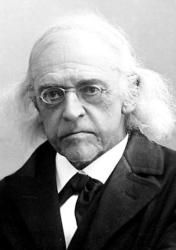
Publius Cornelius Tacitus
 Greece
Biography of Publius Cornelius Tacitus
Publius Cornelius Tacitus (c. 55 – c. 117 AD) was one of the greatest historians of Ancient Rome. He was born, apparently, in southern Gaul, into a noble family. He received the education customary for someone intending to dedicate himself to public service. It is unknown whether his personal name was Publius or Gaius. He initially received his first appointment under Vespasian. Subsequently, he served as a quaestor, praetor (in 88, when he was included in the commission of officials responsible for the organization of the Centennial Games in memory of the city's foundation), and consul in 97. It is likely that he governed some small province from 89 to 93, and held a more responsible position as proconsul of the province of Asia from 112 to 113. During his mature years, Tacitus was considered one of the leading Roman jurists.
The Early Years
In his youth, Tacitus was inclined towards the fashionable and ornate rhetoric, but even then he did so with certain reservations. It is likely that at the age of 26, he wrote a work now called "Dialogue on Orators" (Dialogus de oratoribus). It is a Ciceronian treatise in dramatic form, in which several leading jurists of the Vespasian era discuss changes in rhetorical style and judicial procedure that have occurred since Cicero's time. Soon after the creation of the Dialogue, during the reign of Domitian, a period of censorship and repression began. Tacitus was already married (since 78) to the daughter of Julius Agricola, who governed Britain for seven years until he was recalled by Domitian in 83. In 98, when Nerva and Trajan put an end to the Domitianic repressions, Tacitus published the biography of Agricola. Tacitus believed that Domitian had treated his father-in-law unjustly, and this conviction, combined with outrage over the suppression of freedom of speech and action by the Senate, resulted in Tacitus's fiery indignation towards the emperor and the imperial system. The biography of Julius Agricola (De vita Iulii Agricolae) corresponds to the traditional genre of panegyric biography, but seamlessly incorporates descriptions of the geography of the British tribes and the history of the Roman conquest of the island. These episodes were presumably included to glorify Agricola, who did not shine on the Roman political horizon, and to give color to the text, but today they have become a priceless source of information on early British history.
Later Works
In the same year, 98, Tacitus published another small treatise, "On the Origin, Customs, and Location of the Germans" (De origine, moribus ac situ Germanorum) – a description of the lands, peoples, and customs of Germany. Although this treatise is not as bitter and ironic as Agricola, it is of great interest not only for the valuable information it contains, but also as an example of Tacitus's new style. From 98 to 116, Tacitus worked on his two major works, "Histories" (Historiae) and "Annals" (Annalium ab excessu divi Augusti). The first work covers events from the death of Nero to the reign of Nerva, while the second describes the period from the death of Augustus to the death of Nero. Together, they form a single history from 14 to 96 AD. Tacitus used the years of silence under Domitian to gather materials. Three centuries later, St. Jerome quoted both works as a single composition in 30 books. Of the 14 books of "Histories", which appeared first, only the first four and part of the fifth have survived. They contain a vivid description of the major civil war of 68-69 AD and the beginning of the siege of Jerusalem by Titus. Of the "Annals", which presumably consisted of 16 books, we have almost complete the larger part of the first six, and relatively well-preserved books 11 to 14. These books contain descriptions of the reign of Tiberius, parts of the reign of Claudius, and the majority of the reign of Nero. It is Tacitus's history of the 1st century AD that largely shaped the traditional representations of the first Roman emperors, especially Tiberius and Nero.