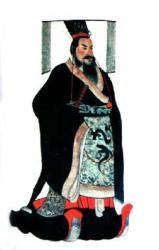
Qin Shi Huang
 China
ChinaBiography of Qin Shi Huangdi
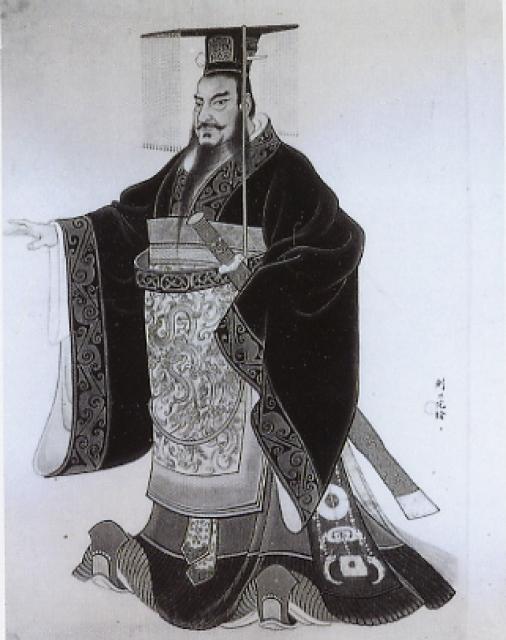
Qin Shi Huangdi, also known as Ying Zheng, was the emperor of the Qin dynasty in China from 246 BC to 221 BC. He became the first emperor to unify China in 221 BC, after the end of the Warring States period. He ruled the empire until his death in 210 BC. Qin Shi Huangdi is one of the key figures in the history of Ancient China.
Early Life and Rise to Power
Qin Shi Huangdi was born in Handan, the state of Zhao. His mother was a concubine of the influential courtier, Lü Buwei. Lü Buwei's actions helped the young Ying Zheng come to power, leading to rumors that he was the true father of the boy. Ying Zheng became the ruler of the Qin state at the age of thirteen, which was already the strongest of the warring states in ancient China at that time. Initially, he was considered underage, and Lü Buwei acted as his regent until 238 BC. However, Ying Zheng did not waste any time and carefully studied the complex process of governing the empire. At the age of twenty-two, he banished his adoptive father to exile, accusing him of plotting a rebellion. Taking power into his own hands, Ying Zheng began the unification of China.
Unification of China
Over time, Qin Shi Huangdi managed to capture all six major states of Ancient China. In thirty-nine years, he became the sole ruler of China, and it was then that he was given the throne name Qin Shi Huangdi. One of the first projects that the young emperor undertook was the construction of his own mausoleum. The construction began in 215 BC and involved anywhere from three hundred thousand to seven hundred twenty thousand workers, according to different sources. However, British historian John Man doubted these figures, believing that there were not that many inhabitants in any of the largest cities in the world during the time of Qin Shi Huangdi. Man tends to believe that only sixteen thousand people were involved in the construction.
Legacy
From the legacy of the first emperor of unified China, the most well-known today is the Great Wall of China and the tomb guarded by the Terracotta Army. The Wall, as it exists today, was built during the Ming dynasty; Qin Shi Huangdi only laid its foundations. The Terracotta Army, on the other hand, is exclusively his legacy. According to the research of Chinese historian Sima Qian, seven hundred thousand people were involved in the construction of the mausoleum and army. However, the discovery of the army was only made on March 29, 1974. A group of farmers digging new wells stumbled upon humanoid sculptures in the ground. Further research revealed that the soldiers were initially made in several large batches using clay molds and then manually refined.