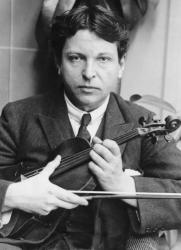
Rafael Millan
 Spain
Spain- Biography of Rafael Millán
- Early Life and Education
- Musical Career and Success
- Recognition and Later Life
Biography of Rafael Millán
Rafael Millán, the Spanish composer, is considered one of the greatest composers in the genre of zarzuela and Spanish operetta. Although Millán gained fame in his youth as a talented violinist, giving concerts in Spain and abroad, his works as a composer became most renowned.
Early Life and Education
Rafael Millán was born on September 24, 1893, in Algeciras, a port city in the southern region of Spain, near Cadiz. He grew up in a musical family, with his father being a member of a military orchestra. His father became his first teacher, and Rafael quickly gained a reputation as an excellent violinist.
Musical Career and Success
In 1914, Millán moved to Madrid to further his career. He secured a position at the Teatro de la Zarzuela, a zarzuela theater in Madrid, under the guidance of his mentor, Pablo Luna. It was natural for Millán's interest in theater to flourish, leading him to create and conduct several works. His first notable piece was the zarzuela "El Príncipe Bohemio" in 1914.
Millán also composed symphonic, choral, and orchestral works, but his 43 zarzuelas and operettas remain his most significant legacy. After 1910, when Pablo Luna's operetta "Molinos de viento" conquered Spain, operettas, particularly those created by Hungarian and Austrian composer Franz Lehár, became more popular than traditional zarzuelas set in Madrid. Many of Millán's early works, such as "El preceptor de su Alteza" (1916), followed these new trends.
Recognition and Later Life
After the premiere of "La Dogaresa" (1920), Rafael Millán established himself as a prominent composer, and the public eagerly awaited his premieres from that moment on. "El pájaro azul" (1921), "Los buscadores de oro" (1922), and "El dictador" (1923) solidified his fame, while later works such as "La gaviota" (1924) and "La severa" (1925) expanded it. Millán was particularly popular in Barcelona, where he made his home and where many of his best works premiered.
The last thirty years of Millán's life are shrouded in mystery. According to reputable sources, he suffered from progressive paralysis until his death in 1938. However, the truth is that after 1925, Millán struggled with mental illness and eventually became a permanent patient in a psychiatric hospital. Towards the end of his life, his mental condition improved to the point where he could complete his final work for the theater, "El tesoro de Golconda" (1952), while living in his beloved Barcelona.
From the beginning of his career, Millán's music caught attention with its exceptional orchestration and highest quality of composition, influencing his contemporaries' work.