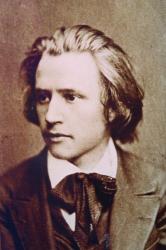
Clement Janequin
 France
Biography of Clément Janequin
Clément Janequin was a French composer, recognized as one of the most important representatives of secular polyphonic song known as chanson. He received his initial musical education at the choral school in his hometown. In the early 1520s, he was ordained as a priest. From 1523 to 1529, he served under Archbishop Jean de Foix in Bordeaux. From 1534 to 1537, Janequin led the choir of the cathedral in Angers, where he likely remained until 1549. In the 1550s, he became a singer in the Royal Chapel in Paris and in 1556, he held the position of "ordinary royal composer." It is possible that he studied under Josquin Des Prez or other composers from his circle.
Contribution to Music
Clément Janequin's fame is evidenced by the collections of his songs, which were published by prominent music publishers such as Pierre Attaingnant and Tilman Susato. These collections also included arrangements of his songs for lute, keyboard, and other instruments. Despite his evident public recognition, Janequin faced financial difficulties throughout his life and died in poverty. The exact year of his death is unknown.
Janequin composed approximately 250 chansons, primarily for four voices, with lyrics by Pierre de Ronsard, Clément Marot, M. de Saint-Gelais, and anonymous poets. The authorship of about 40 of his chansons is disputed by modern scholars, although this does not diminish the quality of the disputed music itself. The main characteristic of Janequin's secular polyphonic music is its programmatic and illustrative nature. His compositions evoke mental images of battles ("Battle of Marignano," "Battle of Renty," "Battle of Metz"), hunting scenes ("Birdsong," "Nightingale," "Lark"), and everyday scenes ("Women's Chatter"). Janequin vividly captures the atmosphere of Parisian daily life in his chanson "Cries of Paris," where one can hear the shouts of street vendors selling milk, pastries, artichokes, fish, matches, pigeons, old shoes, and wine. While Janequin's music displays innovative textures and rhythms, his harmony and counterpoint remain fairly traditional.
Religious Works
Janequin also composed two masses based on his own songs and four-voice arrangements of psalms (collections published in 1549 and 1559). Additionally, he composed "chansons spirituelles," or spiritual songs, in multiple voices, which were published in 1556. These works, in French, possibly indicate Janequin's sympathies towards Calvinism in his later years.