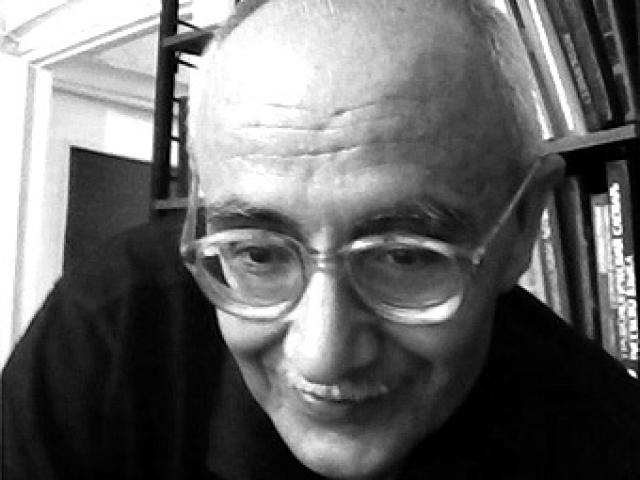
Rafiq Tagi
 Azerbaijan
Biography of Rafiq Tagi
Rafiq Tagi was an Azerbaijani writer, journalist, and doctor. He was born in Baku and received his education at the Azerbaijan State Medical University. Later, he continued his medical studies at the Sechenov Moscow Medical Institute. During his career, he worked as a doctor in Azerbaijan and Russia, serving as the chief doctor of a rural hospital in Azerbaijan and working at a Moscow emergency station. In 1990, Tagi returned to Baku and joined the city's emergency station, where he worked until his death.
Tagi began writing poetry and short stories at a young age. His first short story was published in 1977, and in the mid-1980s, his works were published in Russian for the first time in the magazine "Druzhba Narodov" ("Friendship of Nations"). According to Mediaforum, Tagi published six books and wrote numerous poems, short stories, essays, articles, and sketches.
In the late 1980s, Rafiq Tagi was admitted to the Union of Writers of Azerbaijan. However, he was later expelled in 2004 for a critical essay about the Azerbaijani poetry classic Samed Vurgun. His writings were known for their original style and often sparked controversy. Tagi himself stated in an interview that he did not intend to offend any specific group with his works but simply aimed to speak the truth.
In November 2006, Tagi's article "Europe and Us" was published, which contained critical reflections on Islam. The article was influenced by the global "cartoon scandal" involving the publication of cartoons of Prophet Muhammad in European press and subsequent protests by Muslims. It was published in the newspaper "Senet" ("Art"). The article compared Islam to the values of Europe and criticized the religion for inciting enmity among people.
The publication of the article sparked a scandal, and protests called for retribution against the writer and the editor of "Senet." Demonstrators in the village of Nardaran declared a "death sentence" for Rafiq Tagi, accusing him of insulting Islam and Prophet Muhammad. The protests also targeted "Zionists from the US, Israel, and England." Tagi and the newspaper editor were arrested and later sentenced to prison for inciting religious hatred. However, they were pardoned by the President of Azerbaijan in late 2007.
On November 19, 2011, Rafiq Tagi was attacked and stabbed multiple times while returning home. He was rushed to the hospital, where he underwent several surgeries. His condition initially stabilized but suddenly worsened on November 23, and he passed away while being transported to the intensive care unit. The exact motive for the attack on Rafiq Tagi remains unknown, but there have been speculations that it could be related to his previous writings critical of Islam or his recent publication criticizing the Iranian theocracy.
The death of Rafiq Tagi was widely condemned as an attack on freedom of expression. It sparked discussions about religious extremism and the importance of protecting journalists and writers who express their opinions. The investigation into his murder has not yet yielded any significant results, and it remains a tragic event in the history of Azerbaijani literature and journalism.


