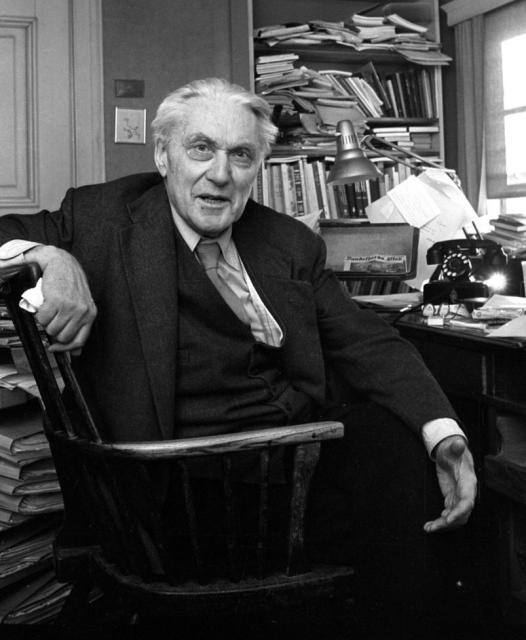
Ragnar Frisch
 Norway
Biography of Ragnar Frisch
Ragnar Frisch, the Norwegian economist and the first laureate of the Nobel Prize in Economics, was born in 1895 in Oslo, Norway. His parents, Anton Frisch, a jeweler, and Ragna Fredrikke b. Kittilsen, hoped that he would continue the family business. Frisch attended the David Andersen workshop to learn the jewelry trade and received his certificate as a jeweler in 1920. However, he also pursued studies in economics at the University of Oslo, following his mother's insistence.
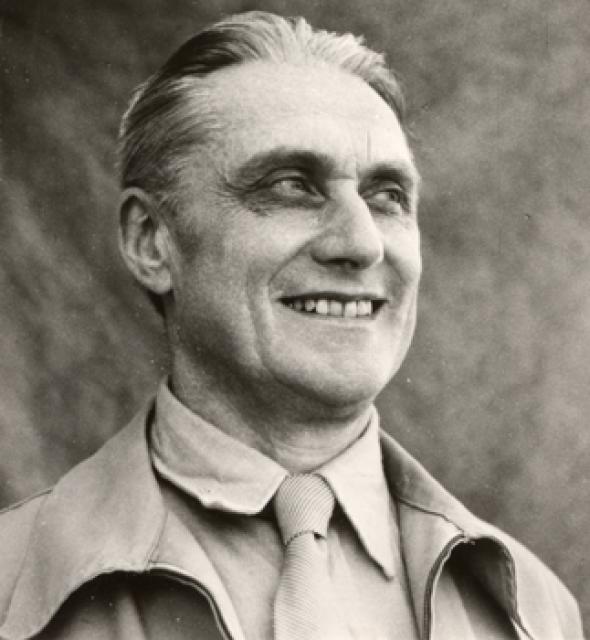
In 1919, Frisch obtained a Bachelor's degree in economics and went on to pursue a Ph.D. In the meantime, he became a partner in his father's firm, and in 1921, he traveled to England and France. Frisch returned to Oslo in 1925 as an assistant professor. By 1928, he earned his Ph.D. and became an adjunct professor. In 1931, Frisch was awarded the title of professor of social economics and statistics at the Institute of Economics. He also held the position of director of the Institute of Social Economics at the University of Oslo. Frisch remained in this position for a long time, conducting his research on production theory, economic dynamics, economic planning, and various other economic problems.
During the period from 1947 to 1964, Frisch authored more than 250 works, although many of them remained as memoranda. In addition to their scientific value, Frisch's contributions to the field of economics also include his efforts to establish economics as a precise science and a scientific discipline.
In 1926, Frisch published his first work, "Sur an probleme d'economic pure" ("On the Problem of Pure Economic Theory"), in which he proposed his own version of consumer demand theory. He based his conclusions on the analysis of consumer behavior. His axioms were considered accurate and surprisingly simple and understandable, and his conclusions appeared logical and mathematically sound. In the 1930s, Frisch actively researched macroeconomic analysis, economic dynamics, and economic cycles.
In 1959, Frisch published a significant work titled "A Complete Scheme for Computing all Direct and Cross Demand Elasticities in a Model with Many Sectors" in the journal Econometrica. In this work, he addressed the problem of estimating elasticities in a complete demand function system. Using his own methods, Frisch presented a new perspective on the theory of production, considering the behavior of both producers and firms. His main work on this topic, "Inledning til produksjons-teorien" ("Introduction to Production Theory"), was published in 1962.
It is known that during World War II, Frisch, being Jewish and an opponent of Nazism, was imprisoned. His contributions to various aspects of modern economic theory, such as general equilibrium theory, oligopoly theory, methods of calculating minimum living standards and population optima, are invaluable.
Frisch also had a significant influence on the establishment of the economic school in Oslo. In 1965, he retired, having received numerous awards and honors from the world of economics, including the Schumpeter Prize and the Antonio Feltrinelli Prize from the National Academy of Sciences in Italy. Frisch was a member of the Norwegian Academy of Science, The Royal Statistical Society, the American Economic Association, and the American Academy of Sciences.
In 1969, Ragnar Frisch was awarded the Nobel Prize for "developing and applying dynamic models to the analysis of economic processes." He and his colleague Jan Tinbergen became the first laureates of the Nobel Prize in Economics. Unfortunately, due to illness, Frisch could not attend the award ceremony.
Throughout his life, Frisch was passionate about mountaineering and genetic research on bees. He was married to Marie Smedal, with whom he had a daughter. After Marie's death in 1952, Frisch remarried Astrid Johannessen.


