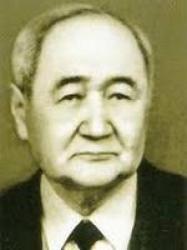
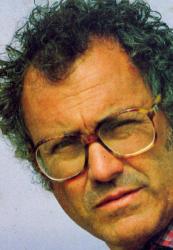
Rainer Maria Rilke
 Austria
Biography of Rainer Maria Rilke
Rainer Maria Rilke, an Austrian poet, was deeply influenced by his unhappy childhood and the five years he spent in a military school in Sankt-Pelten, which left an indelible mark on his sensitive nature and instilled in him a sense of loneliness. His early poetry is typical of neo-romanticism, characterized by vague dreams tinged with mysticism. His collection "Dream-Crowned" (Traumgekrnt, 1897) showcased his vivid imagery and exceptional mastery of rhythm, meter, alliteration, and melodic speech.
Rilke's meticulous study of the works of Danish poet J.P. Jacobsen (1847-1885) heightened his sense of responsibility and filled him with inspiration. Two trips to Russia, his "spiritual homeland" (1899 and 1900), resulted in the collection "The Book of Hours" (Das Stundenbuch, 1899-1903), which resounded with prayers addressed to a non-dogmatic understanding of the God of the future. The prose supplement to "The Book of Hours" was "Stories of a Good God" (Geschichten vom lieben Gott, 1900). Rilke's desire to "live among the crowd but be homeless in time" predetermined his life as a recluse and his homelessness. He adopted a family coat of arms, naively believing in his belonging to an ancient knightly lineage, which he immortalized in his impressionistic prose poem "The Song of Love and Death of Cornet Christopher Rilke" (Die Weise von Liebe und Tod des Kornets Christoph Rilke, 1906).
From 1900 to 1902, Rilke lived near the artists' colony in Worpswede, and in 1901, he married Clara Westhoff. Financial constraints and artistic exploration led him to Paris, where he had the opportunity to interact with sculptor Auguste Rodin. French Impressionist painting and symbolic poetry also influenced Rilke's work, which gained plasticity, a wide range of tones, and a focus on conveying the unchanging essence of things ("New Poems" - Neue Gedichte, 1903-1908). His most significant prose work, the multifaceted decadent novel "The Notebooks of Malte Laurids Brigge" (Die Aufzeichnungen des Malte Laurids Brigge, 1911), revealed the diverse influence of Paris on Rilke's receptive aestheticism.
The outbreak of World War I forced him to temporarily leave France. In 1922, his long-restrained creative tension found release in the difficult-to-comprehend, often dark "Duino Elegies" (Duineser Elegien, 1912-1923) and the inspired "Sonnets to Orpheus" (Die Sonette an Orpheus, 1923). Developing his deeply original symbolic cosmology, Rilke ascended to new metaphysical heights, seeking reconciliation of dissonances and contradictions that had plagued him throughout his life. In the passionate affirmation of the visible, "sweet earth," the concept of "transformation" emerged as a means of conveying the inner reality of things. Rilke's genius was solitary, and his perception of life, as well as his own oeuvre profoundly influenced by the thought of death, was tragic. Under his pen, the German language acquired exceptional significance, and his letters are a testament to his absolute dedication to poetry.