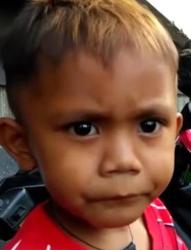
Rapi Pamungkas
 Indonesia
Rapi Pamungkas became the subject of international attention in 2018, when reports from Sukabumi, Indonesia, described a two-year-old who had developed a dangerous cigarette habit. The story quickly spread through news coverage and online video, often in sensational terms. Indonesian child-protection officials treated the case as a health and welfare concern, calling for medical care and close support rather than public spectacle.
A Childhood in Sukabumi
Pamungkas was a toddler living with his family in Sukabumi, West Java. Reports said that he first encountered tobacco by picking up discarded cigarette butts near his mother’s market stall. Adults in the area were said to have helped light them for him. The exposure was described as having progressed into regular smoking while he was still very young.
In August 2018, his family told news outlets that he was smoking heavily, with some reports repeating a figure of up to 40 cigarettes a day. That number was a reported estimate, not a measure independently established in a medical record. The images of a small child holding a cigarette drew shock and widespread sharing online, but they also raised urgent questions about the adults and environment around him.
Health and Child-Protection Response
The Indonesian Child Protection Commission (KPAI) publicly said that the child needed rehabilitation and medical treatment. It stated that it was monitoring efforts to support his recovery and coordinating with social services. Officials emphasized that nicotine dependence in a toddler required sustained health care and adult supervision, not blame directed at the child.
Later reports described local assistance, including food and milk, and suggested that he had briefly stopped smoking before the habit returned. Such reports varied, and they did not establish a complete medical history or a long-term outcome. The case therefore became a reminder that short-term attention and informal interventions could not substitute for ongoing professional support.
A Wider Public-Health Debate
Pamungkas’s story unfolded in a country where tobacco use is widespread and cigarettes are highly visible in daily life. The incident prompted renewed discussion in Indonesia about children’s exposure to tobacco, cigarette access, advertising, and the influence of adults who smoke around them. Child-protection advocates used the case to call for prevention and treatment for children affected by nicotine dependence.
Because he was a very young child, there is little public information about his life beyond the reports that brought attention to the case. His biography is consequently less a record of a public career than a snapshot of a troubling moment and the response it prompted. The most responsible account keeps the focus on the child’s welfare, the limitations of sensational reporting, and the need for long-term care and protection.