Ravi Batra
 USA
USA- Biography of Ravi Batra
- Early Life and Education
- Academic Career
- Influence of P.R. Sarkar
- Philosophical Influence
- Notable Books
- Awards and Recognition
Biography of Ravi Batra
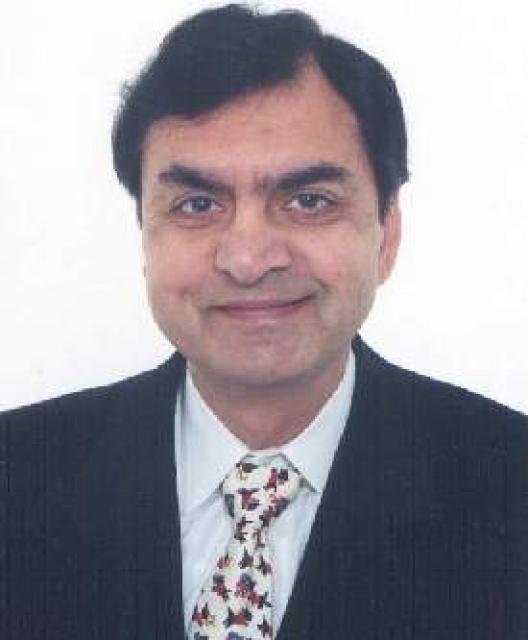
Ravi Batra is an Indian-American economist best known for his book "The Great Depression," in which he predicted the rapid rise of the US financial market in the 1980s, followed by a catastrophic crash and depression in the 1990s. The main theme of his works, including his latest book, is financial capitalism, which he argues leads to excessive inequality and political corruption, ultimately resulting in financial crises and economic depressions.

Early Life and Education
Raveendra N. Batra was born on June 27, 1943, near the ancient city of Multan in India (now part of Pakistan). His family moved to Sonipat, a district in the Indian state of Haryana, near Delhi, where his father was a professor of Sanskrit. Batra completed his Bachelor of Arts degree from Punjab University in 1963 and obtained a Master's degree from Delhi School of Economics in 1965. In 1969, he earned a Ph.D. in economics from Southern Illinois University. His groundbreaking research during his student years was published in renowned journals, impressing his professors.
Academic Career
Batra began his career as an assistant professor of economics at the University of Western Ontario in 1969. He later moved to Southern Methodist University in Dallas, Texas in 1970, where he became a professor of economics. By the age of 30, he was appointed as the head of the department. He gained significant recognition and success in his career, especially after the publication of his seminal theoretical articles and two books focused on trade theory. By 1978, his career was flourishing.
Influence of P.R. Sarkar
In 1963, Batra met P.R. Sarkar, also known as Shrii Shrii Anandamurti, a respected teacher in the social-spiritual movement called 'Ananda Marga' ('The Path of Bliss'). Inspired by Sarkar's teachings, Batra decided to contribute to his respected mentor's work. In 1978, Batra published the book "The Downfall of Capitalism and Communism: A New Study of History," where he shifted his focus from theoretical economics to history. The book advanced Sarkar's theory of the social cycle, which analyzed four different classes with varying psychological preferences. Batra predicted that capitalism in the West would soon come to an end, leading to the collapse of communism in the Soviet Union. While his forecast of capitalism's downfall due to inequality and speculation did not come true within a few decades, his prediction about the fall of communism due to internal stagnation and oppression happened earlier than expected.
Philosophical Influence
Batra's works should be viewed through the lens of his mentor's philosophy, which had a significant impact on the economist. Sarkar's ideas were rooted in Hindu traditions of idealism, perceiving the entire universe, living and non-living matter, as permeated with singular consciousness, the living God. Souls of all living forms have specific levels of evolutionary advancement in different layers of multidimensional space (epochs), progressing from birth to death and then to the next birth, thereby developing their consciousness. Once they reach the level of human consciousness, their duty is to strive for union with God's consciousness. Based on these principles, individuals are encouraged to regularly practice yoga-meditation, cultivate a concept of God, and live an ethical and vegetarian lifestyle. Following Sarkar's philosophy, Batra rejected the core principles of materialistic economics and advocated for the idea that the sole purpose of increasing people's income is to enhance their consumption in a balanced and sustainable manner, in harmony with nature, fellow humans, and other forms of life. Just distribution is seen not only as a means of ensuring material well-being but also as an opportunity for personal development to its highest point. This is an integral part of Sarkar's Progressive Utilization Theory (PROUT).
Notable Books
Ravi Batra is the author of six internationally renowned best-selling books, with two making it onto The New York Times Best Seller list. In 1980, he published "Muslim Civilization and the Crisis in Iran," where he predicted the fall of the Shah and the rise of the intellectual class, followed by a protracted war with Iraq. In 1984, he wrote his first best-seller, "Regular Cycles of Money, Inflation, Regulation, and Depressions," focusing on the statement that improper wealth distribution is the cause of past speculative financial manias leading to crashes and depressions. In 2008, Batra released his latest book, "The New Golden Age: The Coming Revolution against Political Corruption and Economic Chaos," analyzing the current economic downturn and the forces behind it. In this work, he also outlines a bright future for humanity if necessary measures for positive change are taken.
Awards and Recognition
Ravi Batra was awarded the satirical Ig Nobel Prize in Economics in 1993 for "publishing a massive number of his own books in order to prevent a worldwide economic collapse."