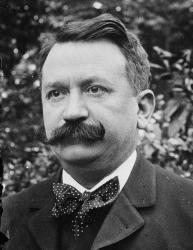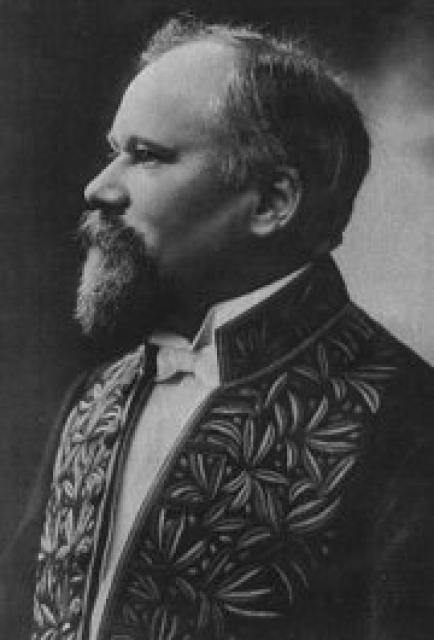
Raymond Poincare
 France
Biography of Raymond Poincaré
Raymond Poincaré was a French statesman and the President of France during the Third Republic from 1913 to 1920. He received his legal education in Paris and initially practiced law. For a year and a half, he served as the head of the Ministry of Agriculture. In 1886, Poincaré was elected to the Chamber of Deputies and subsequently played a prominent role within the Republican Party, aligning himself with the old opportunists. He was frequently chosen as a rapporteur for budgetary matters and in 1895, he became the Minister of Finance in the Dupuy cabinet. From 1897, he was elected as the Vice President of the Chamber of Deputies. Poincaré published "Du Droit de suite dans la propriété mobilière" in 1883.
In 1903, he became a senator and in 1906, after the fall of the Rouvier cabinet, he took on the role of Finance Minister in the newly formed Sarrien coalition cabinet as a representative of the moderate Republicans. Poincaré served as the Prime Minister of France three times, including two terms after his presidency, from 1912 to 1913, 1922 to 1924, and 1926 to 1929. In 1909, he became a member of the French Academy, filling the position a year after his cousin, the renowned mathematician Henri Poincaré, was elected.
The major event of his presidency was World War I, as Poincaré was known as a supporter of the war and was even nicknamed "Poincaré la guerre" (Poincaré the war) before its outbreak. During the challenging times for France, especially in the early stages of the war, Poincaré and his government, led by Georges Clemenceau, effectively managed the organization of national defense.