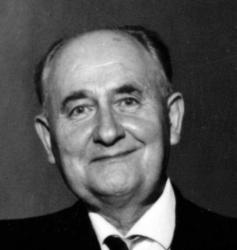
Rebecca Clarke
 Great Britain
- Early Life and Education
- Resumption of Education and Career as an Altoist
- Composing and Performances in the United States
- Return to England and Later Career
- Marriage and Awards
- Legacy
Early Life and Education
Rebecca Helferrich Clarke was born in 1886 into a family with a rich cultural heritage. Her American father was a representative for Eastman Kodak, while her German maternal grandfather was a professor of economics in Munich and her great-uncle was the renowned historian Leopold von Ranke.
In 1903, Clarke began her musical education at the Royal Academy of Music as a violin student. However, her father's disapproval forced her to discontinue her studies in 1905 after she received a marriage proposal from one of her professors.
Resumption of Education and Career as an Altoist
In 1907, Clarke resumed her studies at the Royal Academy, this time pursuing composition under Charles Stanford. At his suggestion, she switched from violin to viola, which was a relatively new solo instrument at the time. She also took private lessons with the violist Lionel Tertis.
Due to her father's disapproval of her extramarital affairs, she was expelled from her family home in 1910. To earn a living, she embarked on a successful career as a professional violist, becoming a member of several all-female ensembles, including the Norah Clench Quartet. In 1912, she joined the Queen's Hall Orchestra at the invitation of Henry Wood, making her one of the first women to perform professionally in an orchestra.
Composing and Performances in the United States
Clarke began publishing her compositions under pseudonyms, such as Anthony Trent for her "Morpheus" in 1917. In 1916, she moved to the United States, where she performed extensively, often collaborating with cellist May Mukle. She toured Hawaii in 1918-1919 and embarked on a round-the-world tour in 1923.
From 1917, Clarke received the patronage of the American arts philanthropist Elizabeth Sprague Coolidge, who supported her creativity and awarded her second prizes for her Sonata for Viola and Piano and Piano Trio at the Berkshire Music Festivals. In 1922, she composed her Rhapsody for Viola and Piano.
Return to England and Later Career
Clarke returned to England in 1924 and settled in London, where she performed as a soloist and with renowned musicians. She co-founded The English Ensemble piano quartet in 1927 and broadcast regularly on BBC radio. In the late 1920s, her composing activity declined.
With the outbreak of World War II, Clarke permanently moved to the United States, where she lived with her brothers. Her relationships with her family remained strained. A brief resurgence in her compositional career occurred from 1939 to 1942, during which she wrote her Prelude, Allegro, and Pastorale for Clarinet and Viola.
Marriage and Awards
In 1944, Clarke married James Friskin, a pianist and music teacher. After her marriage, she composed just three more works, including her song "God Made a Tree" in 1954. In 1949, she became the president of the Chautauqua Society in New York, where she had performed chamber music concerts from 1945 to 1956. In 1963, she was awarded an honorary fellowship at the Royal College of Music.
Legacy
Rebecca Helferrich Clarke was a remarkable composer and violist whose contributions to the music world are often overlooked. She left a lasting legacy through her influential compositions, her advocacy for female musicians, and her establishment of the May Mukle Award for outstanding cellists at the Royal Academy of Music.